Fine Line Tattoos: Ideas, Aging & What to Ask Your Artist
By Alice Tattoos · Style Guide · May 18, 2026 · 5 min read
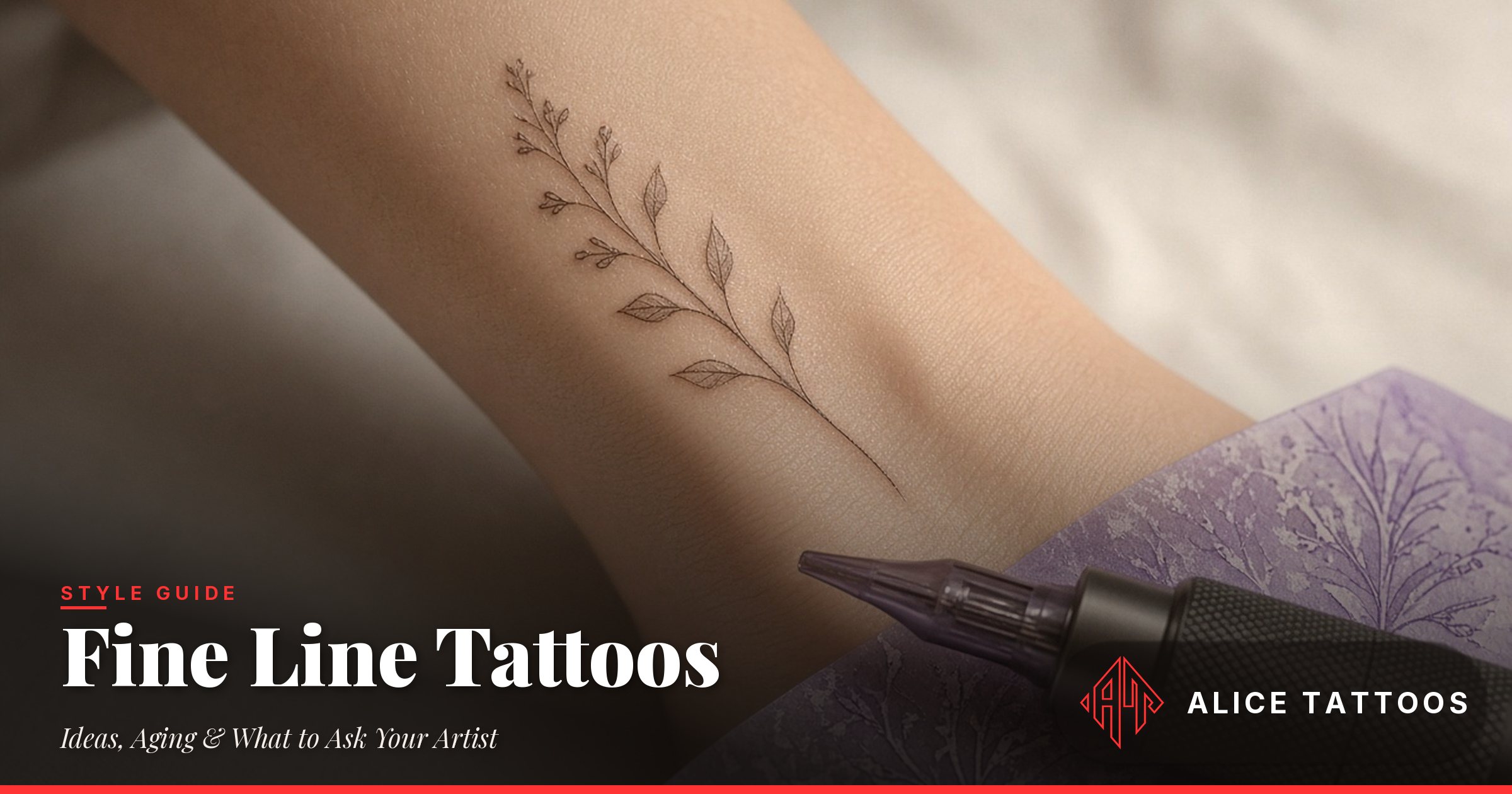
Short answer: fine line tattoos use single needles or very thin needle groupings to create delicate, hair-thin lines — florals, script, small symbols, and subtle illustrations. They hurt a little less than bold work, heal fast, and look elegant. The trade-off: ultra-thin lines fade and soften sooner than bold ones, so fine line done well means slightly larger, slightly spaced, and applied by a specialist.
Key takeaways
- Fine line is a technique, not a design — it suits florals, lettering, micro motifs, and subtle personal pieces.
- It usually feels milder than bold styles (a light scratch rather than a deep burn), and sessions are often short.
- The honest downside: thin lines soften over the years. Combat it with size, spacing, sunscreen, and a specialist.
- Choose an artist whose healed fine line work is sharp — fresh photos flatter every style.
What counts as fine line?
Fine line work is defined by needle and pressure: single needles (or 3RL groupings) and a light hand produce the signature wispy line. Common subjects:
- Florals and botanicals — the single most-requested fine line subject, from single stems to wrap-around vines.
- Script and lettering — dates, names, single words in thin elegant fonts.
- Micro symbols — tiny hearts, stars, moons, initials, coordinates.
- Fine-line illustration — animals, portraits, landscapes rendered in minimal strokes.
- Ornamental and celestial — delicate geometric accents, constellations, crescent moons.
Does fine line hurt less?
Generally, yes — a single needle is less traumatic than a large grouping pushing solid color. Most people describe fine line as a light scratch. Placement still rules everything: a fine line rib piece hurts more than bold work on a forearm. Check the tattoo pain chart before you pick a spot.
The honest truth about aging
Ink spreads microscopically under the skin for the rest of your life. The thinner and closer the lines, the sooner they soften or merge. Fine line isn't doomed — but it needs to be drawn for the long term:
- Size up. A design 20–30% larger than the delicate reference photo stays readable a decade later.
- Leave space between lines. Dense hatching and tightly packed petals blur together first.
- Pick a stable placement. Forearms, upper arms, thighs, calves, and upper back age far better than fingers, wrists, feet, and ribs. (Finger and hand pieces are a special case — see the hand tattoos guide.)
- Sunscreen for life. UV is the fastest way to turn crisp linework into a grey smudge.
- Budget for a touch-up. Many fine line pieces benefit from one pass after healing — our touch-up guide covers timing and cost.
How much does a fine line tattoo cost?
Price follows time, not style. A tiny symbol usually lands at the shop minimum ($80–$200 in the US); a detailed floral forearm piece might run $200–$500 depending on the artist's rate and city. Specialists in high demand charge more, and it's worth it — the margin for error in single-needle work is thin. Full breakdown in the tattoo cost guide.
Choosing a fine line artist
- Look for portfolios that are mostly fine line. It's a specialty — don't ask a bold traditional artist to dabble.
- Demand healed photos. Fresh fine line looks perfect on everyone; healed work shows whether their needle depth is consistent. Artist profiles here have a Healed Journeys tab.
- Ask how they'll adapt your reference. A good artist will enlarge or simplify designs that would blur. That's a green flag, not gatekeeping — the artist checklist has the full vetting list.
- Bring a strong reference. If you don't have one, iterate on ideas in the AI design studio first so your consultation is concrete.
Related reads: cybersigilism (fine line's spikier cousin), choosing a tattoo that ages beautifully, and the 2026 trends guide for context on where fine line sits.
Frequently asked questions
Do fine line tattoos fade faster?
Yes — thin lines soften and lighten sooner than bold ones because there's less ink and lines sit closer together. Sizing up, spacing lines out, choosing a stable placement, and wearing sunscreen keeps fine line readable for many years.
How much do fine line tattoos cost?
Most small fine line pieces cost the shop minimum to around $200–$350 in the US. Larger or detailed pieces are priced by the artist's hourly rate. Specialists charge more, and their work tends to need fewer touch-ups.
Do fine line tattoos hurt less?
Usually. A single needle feels like a light scratch compared with the heavier pressure of bold linework or color packing. Placement matters more than style — thin skin over bone still hurts regardless of needle size.
Where do fine line tattoos last the longest?
The outer forearm, upper arm, thigh, calf, and upper back age best — stable skin, low friction, easy to protect from the sun. Fingers, hands, wrists, feet, and ribs fade fastest.
Can fine line tattoos be touched up?
Yes. A pass over softened lines after healing is common and often restores crispness. Wait until the tattoo is fully settled — usually 4–8 weeks — before judging whether it needs one.