How to Choose a Tattoo That Ages Beautifully: The 2026 Expert Guide
By Alice Tattoos · Tattoo Education · Jul 19, 2026 · 12 min read
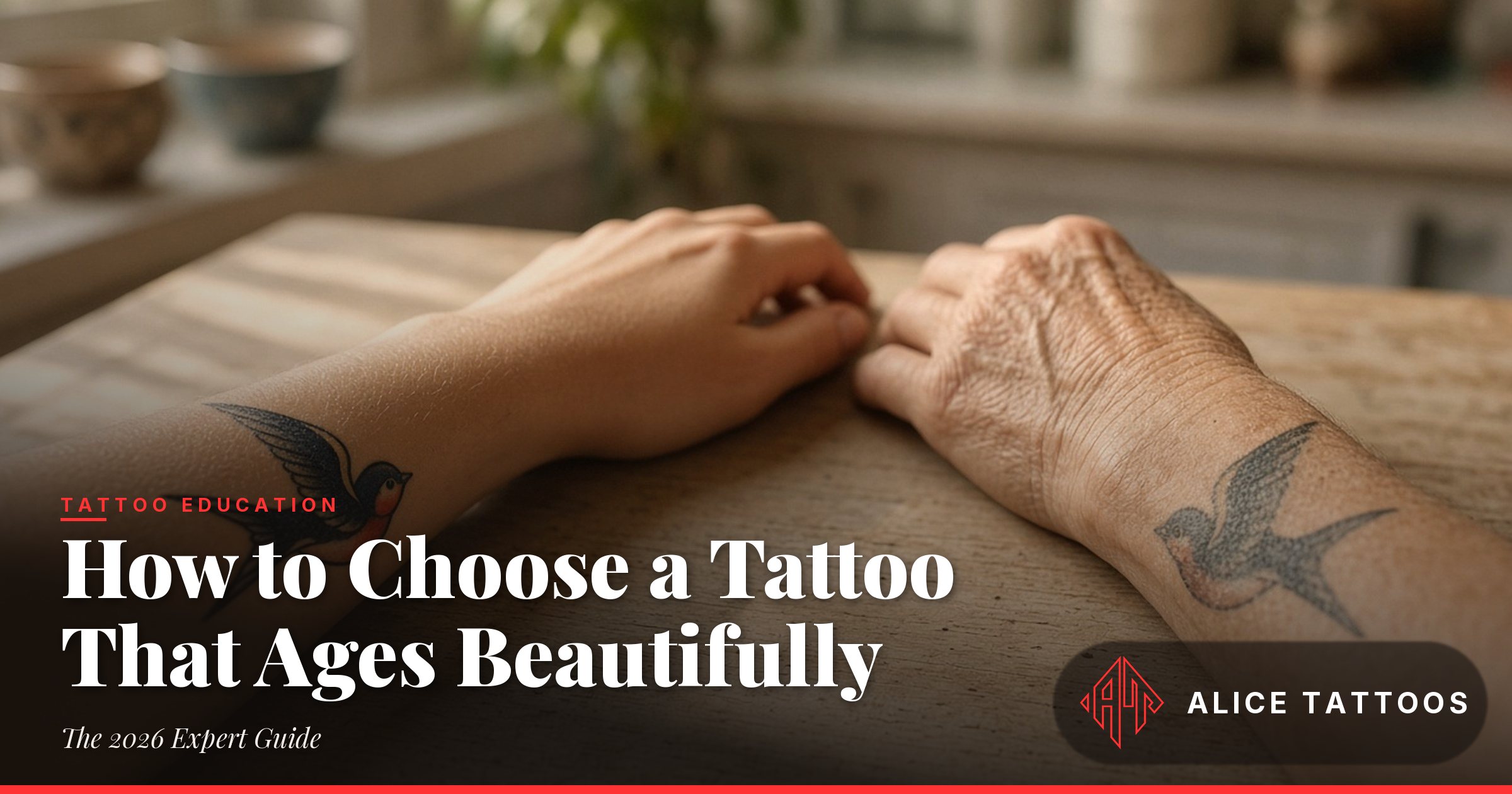
How to Choose a Tattoo That Ages Beautifully
The 2026 Expert Guide to Timeless Ink That Looks Better Every Decade
A tattoo is forever—but how it looks in ten, twenty, or fifty years depends on choices you make before the needle ever touches your skin.
At AliceTattoos, we believe great body art shouldn't just turn heads on Instagram day one; it should earn compliments decades later. In this guide, our award-winning artists break down exactly how to choose designs, styles, placements, and artists that ensure your ink ages like fine wine, not spoiled milk.
1. Understand How Tattoos Age
Before choosing your design, it helps to understand what happens to ink under your skin over time. Your immune system constantly attacks tattoo pigment as a foreign substance. Over years, larger particles break down and disperse, causing lines to soften and colors to mute. Sun exposure accelerates this dramatically—UV radiation breaks down ink pigments and damages the collagen that holds them in place.
Skin also changes. As we age, skin loses elasticity, thins, and wrinkles. A tattoo on tight, youthful arm skin will behave very differently on looser, older skin. Weight fluctuations, pregnancy, and muscle gain or loss all reshape the canvas your tattoo lives on.
The good news? Certain styles, placements, and colors inherently resist these changes far better than others. Making informed choices upfront is your best insurance policy.
2. Choose Styles Built to Last
Not all tattoo styles age equally. Some look incredible fresh but blur into indistinguishable blobs within a decade. Others actually improve with age as subtle softening adds character and depth.
Styles That Age Exceptionally Well:
- Traditional American & Neo-Traditional: Bold black outlines, limited color palettes, and high contrast ensure these tattoos remain readable for decades. The thick lines and simple shading are practically engineered for longevity.
- Japanese (Irezumi): Large-scale designs with bold outlines, flat color fields, and strong compositions that use the body's natural flow. Japanese masters have perfected techniques that stand the test of centuries, not just years.
- Blackwork & Black and Grey Realism: Dense black ink and strong tonal contrast hold up remarkably well. Black pigment is more stable under UV exposure and resists immune breakdown better than most colors.
- Geometric & Mandala: Symmetrical designs with consistent line weight and solid fills age predictably. Even if lines soften slightly, the overall composition maintains its integrity.
Styles Requiring Extra Care:
- Fine Line: Delicate single-needle work can look stunning but may fade and blur faster. These pieces often need touch-ups every 5-10 years to maintain crispness.
- Watercolor: The lack of black outlines means watercolor tattoos have no structural skeleton to hold them together as colors diffuse. Many become unrecognizable within 5-7 years.
- Micro-Realism: Tiny detail is the first thing to go. What looks photorealistic at one inch becomes a blurry suggestion at ten years.
- White Ink & UV Reactive: White pigment fades fastest of all colors and can turn yellowish. UV ink has unpredictable longevity and limited research on long-term effects.
3. Placement Matters More Than You Think
Where you put your tattoo affects its aging process as much as the design itself. Different body areas experience different levels of sun exposure, friction, stretching, and skin thickness.
Prime Placement for Longevity:
- Upper Arms and Outer Thighs: Protected from sun when wearing short sleeves, minimal stretching, and relatively stable skin over time. These areas are gold standards for long-lasting tattoos.
- Upper Back and Shoulders: Less sun exposure unless you're frequently shirtless, and the skin here ages relatively slowly compared to face, neck, or hands.
- Calves: While lower legs do see sun, calf skin is thicker and more resilient than shin or ankle skin. Great for medium to large pieces.
High-Maintenance Placements:
- Hands, Fingers, and Feet: Constant use, frequent washing, thin skin, and high sun exposure make these tattoos fade fastest. Touch-ups are almost guaranteed every few years.
- Inner Arms and Inner Thighs: Friction from arms against the body and clothing rubs ink away over time. These areas also experience significant stretching.
- Stomach and Lower Back: Weight fluctuations, pregnancy, and aging dramatically reshapes these areas. Tattoos here can distort significantly.
- Neck and Face: Thin, delicate skin with constant movement means faster fading. These placements also limit professional opportunities and require serious commitment.
Pro tip from Alice: "If you want a tattoo that looks amazing at your 50th birthday party, think about where your skin will be most stable for the next three decades."
4. Color Choices and Longevity
Not all pigments are created equal. Some colors naturally resist fading better than others, and modern ink formulations continue improving. Here's what to know:
- Black & Grey: The undisputed champions of longevity. Black carbon-based pigment is the most stable and UV-resistant choice available. Black and grey tattoos often look better at twenty years than they do at two.
- Dark Blues & Greens: These colors hold up surprisingly well, especially deep navy and forest green. They resist sun damage better than bright or pastel alternatives.
- Red & Orange: Historically prone to fading, modern organic red pigments have improved significantly. Still, expect some softening over time and prioritize sun protection.
- Yellow & White: The most fade-prone colors. White often disappears entirely or turns into a subtle scar-like texture. Use these as accents rather than primary design elements.
- Pastels & Lighter Tones: Light pink, lavender, and peach look dreamy fresh but have the shortest lifespan. Consider whether you're comfortable with a muted, ghosted version of your design in fifteen years.
5. Size and Detail: The 10-Year Test
Here's a simple rule: if your tattoo's smallest detail is smaller than a pencil eraser, it probably won't hold up well. Over time, lines spread, colors bleed, and tiny elements merge into indistinguishable shapes.
When considering a detailed piece, ask yourself: Will this still be readable from three feet away in 2036? If the answer is no, talk to your artist about simplifying the design, increasing line weight, or enlarging the overall piece.
Larger tattoos with adequate spacing between elements age far better than cramped compositions. Give your ink room to breathe—it pays dividends decades later.
🎯 The AliceTattoos Longevity Checklist
- Bold outlines at least 1-2mm thick for main design elements
- High contrast between subject and background
- Limited color palette with darker, more stable pigments
- Stable placement away from high-friction or high-stretch areas
- Adequate size for detail level—minimum 6 inches for complex pieces
- Sun protection strategy from day one: SPF 50+, protective clothing, shade
- Artist expertise in the specific style with proven healed work examples
6. Artist Selection: Your Most Important Decision
The artist you choose matters more than any other factor. A mediocre design applied with expert technique will outlast a great design applied poorly. When vetting artists for longevity-focused work:
- Review healed work: Ask to see photos of tattoos taken 2+ years after completion. This reveals how their technique holds up over time.
- Specialization matters: Artists who focus on one or two styles typically achieve better long-term results than generalists. A black and grey specialist will likely deliver better aging black and grey than someone who dabbles in everything.
- Needle depth & saturation: Experienced artists know exactly how deep to place ink for optimal retention without blowouts. This technical precision directly impacts longevity.
- Portfolio consistency: Look for portfolios where every healed piece looks crisp and well-saturated. Inconsistency is a red flag.
7. Commit to Aftercare Like Your Tattoo Depends On It—Because It Does
Even the most perfectly designed and applied tattoo will fail if neglected during healing and beyond. Proper aftercare in the first month sets the foundation, but long-term care determines the aesthetic outcome years later.
- Healing phase: Follow your artist's instructions precisely. Avoid sun, swimming, soaking, and picking. Use recommended aftercare products only.
- Sun protection: This is the single biggest controllable factor in tattoo aging. Apply SPF 50+ sunscreen to exposed tattoos every single time you go outside. Reapply every two hours.
- Moisturize regularly: Healthy, hydrated skin displays ink more vibrantly and helps maintain crisp edges. Dry skin accelerates the appearance of aging.
- Plan touch-ups: Most tattoos benefit from a minor touch-up after 10-15 years. Budget for this as part of your long-term tattoo maintenance.
Ready for Ink That Lasts a Lifetime?
At AliceTattoos, we specialize in creating body art designed to look incredible for decades, not just days. Our artists consult with you on design, placement, and style choices that align with your long-term vision.
📍 Visit Us: 123 Ink Avenue, Arts District
📞 Call: (555) 123-TATTOO
📧 Email: bookings@alicetattoos.com
🕒 Hours: Tue-Sat, 11am - 8pm
Walk-ins welcome | Consultations always free
Book Your Consultation TodayFollow us @AliceTattoos for daily inspiration and behind-the-scenes content
Written by the Alice Tattoos Team | Published July 19, 2026
Questions? Drop us a line or stop by the studio—we love talking ink!