How Much Does a Tattoo Cost in 2026? Real Prices by Size, Style & Placement
By Alice Tattoos · Guides · Oct 18, 2026 · 8 min read read
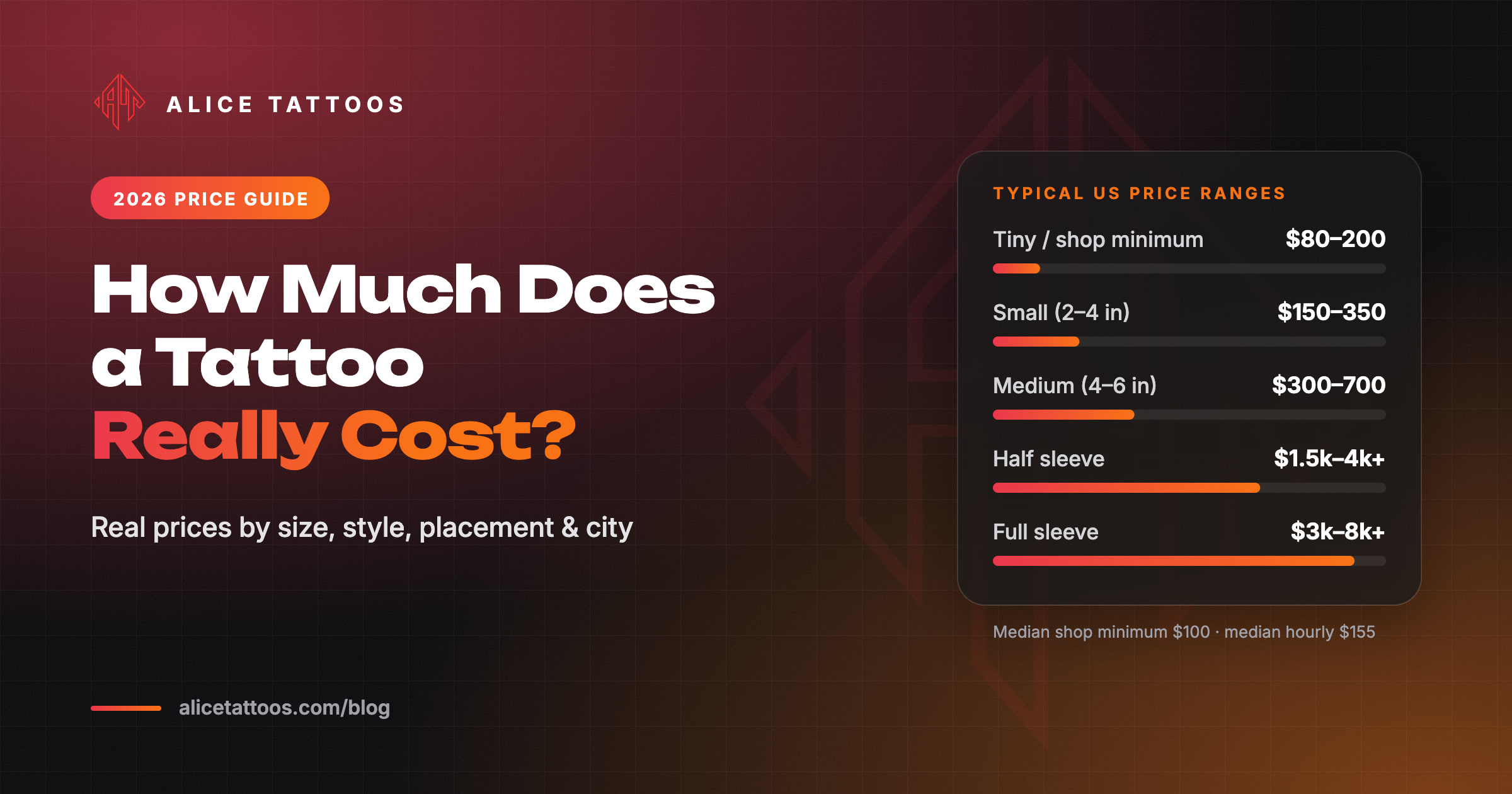
Short answer: in the US, most tattoos cost between $100 and $700. A tiny tattoo usually costs the studio's minimum ($80–$200), a palm-sized piece runs about $150–$350, and large projects like sleeves are billed by the hour, landing anywhere from $1,500 to $8,000 or more. Most artists charge $150–$250 an hour. The rest of this guide explains where those numbers come from, so you can budget your tattoo before you message an artist.
Key takeaways
- The most common shop minimum is $100. In a 2026 check of 41 US studios' published rates, the median hourly rate was $155.
- Price ≈ hours × hourly rate. Size sets the baseline; detail, placement, and color decide how many hours it takes.
- Budget 20–30% on top of the quote for the tip, aftercare, and a possible touch-up.
- Get a real quote by sending the artist size (in inches), placement, style, color vs. black-and-grey, and a reference. The template is below.
How much does a tattoo cost by size?
Size is the fastest way to set a budget, because it roughly predicts how many hours you'll be in the chair. These are typical US ranges for a solid, licensed artist in 2026:
| Size | Time | Price |
|---|---|---|
| Tiny (under 2 in) a symbol, a word, fine-line heart | Under 1 hr | $80–$200 |
| Small (2–4 in) wrist, ankle, behind the ear | 1–2 hrs | $150–$350 |
| Medium (4–6 in) palm-sized forearm or calf piece | 2–4 hrs | $300–$700 |
| Large single piece full forearm, thigh, shoulder | 4–10 hrs | $600–$2,000 |
| Half sleeve | 10–25 hrs | $1,500–$4,000+ |
| Full sleeve | 20–50 hrs | $3,000–$8,000+ |
| Full back piece | 30–80+ hrs | $4,500–$12,000+ |
Two tattoos of the same size can still be priced very differently. Three inches of bold lettering takes a fraction of the time of a three-inch photorealistic eye. That's why artists price by time, not by square inch.
The formula artists actually use
Almost every quote comes down to one equation:
Tattoo price ≈ estimated hours × hourly rate (with the shop minimum as the floor)
Published rates cluster tightly. A 2026 survey of 41 US studios' own pricing pages found a median shop minimum of $100 and a median hourly rate of $155. Most rates fell between $150 and $250 an hour, and the highest was $300. Smaller cities weren't automatically cheaper: some studios in Missoula and Asheville charge the same $200/hr as shops in Los Angeles and Seattle. The artist's reputation and waitlist move the price more than local rent does.
For larger projects many artists switch to a day rate, typically $1,000–$2,500 for an established artist. It's usually a little cheaper per hour than paying hourly, and you know the cost of the session up front.
A worked example
Say you want a 5-inch black-and-grey botanical piece on your forearm, from an artist who charges $160/hr and estimates 3 hours:
- Tattoo: 3 hrs × $160 = $480 (your deposit is usually subtracted from this, not added)
- Tip at 20%: $96
- Aftercare (unscented soap + lotion): ~$20
- Realistic total: about $600
Budget for the total, not just the quote. Otherwise the tip ends up feeling like a surprise.
Why a tiny tattoo still costs $100
This is the most common pricing complaint, and the answer is simple: the setup costs the same whether the tattoo takes five minutes or five hours. Each appointment uses single-use needles and cartridges, ink caps, gloves, barrier film, a stencil, and disinfectant. Setup and teardown take 30–45 minutes of the artist's time before you count the tattoo itself. The shop minimum covers that.
Money-saving tip: if you want several tiny pieces, ask whether you can do them in one session. Two small tattoos in one appointment often cost less than two separate minimums.
What makes a tattoo cost more (or less)
- Detail and style. Realism, dense dotwork, fine ornamental patterns, and smooth color blends take the most hours. Bold traditional work moves faster, though clean lines and solid fills still take real skill.
- Placement. Ribs, hands, feet, necks, elbows, and knees are bony, stretchy, or curved, so the artist has to slow down. The same design can take noticeably longer on your ribs than on your outer arm.
- Color. Color isn't automatically pricier, but packing saturated color or layering many blended tones adds time.
- Cover-ups and reworks. Hiding an old tattoo usually means a bigger, darker design and more planning, so expect to pay more than you would for the same size on clear skin. Our removal vs. cover-up guide explains when each one makes sense.
- Artist demand. An artist with a two-year waitlist and a signature style charges more, and you're paying for consistency you can see in their healed work.
- Custom design time. Some artists charge a drawing fee or roll it into the deposit. Flash (pre-drawn designs) is almost always cheaper because the drawing is already done.
The costs people forget
Deposits
Most artists take a $50–$300 deposit to hold your date and start drawing. It's usually subtracted from the final price, but it's often non-refundable if you cancel or no-show. Read the policy before you pay. On Alice Tattoos, artists who take deposits show their deposit policy on their profile and in the booking flow before you confirm, so you see the terms first.
Tips
In the US, 15–20% is standard for good work. More is welcome on a long, complicated session. Tips are paid in addition to the quote. Our full tattoo tipping guide covers multi-session pieces, touch-ups, and how tipping works outside the US.
Aftercare and touch-ups
Aftercare products cost $15–$30. A touch-up can cost nothing or a full session, depending on the artist. Many offer one free touch-up within a set window, but hands, fingers, and feet are often excluded because they fade unpredictably. The cheapest touch-up is the one you never need, so follow a proper aftercare routine and track the first few weeks of healing in the Healing Hub.
How to get an accurate quote (copy this message)
Vague messages get vague quotes. Artists can give you a reliable number when you send them these five things:
Hi! I'd love a quote for a [style, e.g. fine-line botanical] tattoo of [subject], about [width × height] inches, on my [exact placement], in [black and grey / color]. Reference images attached for mood and style. [Any existing tattoos or scars in the area.] Do you price this flat or hourly, and what does your deposit cover?
Two habits make quotes more accurate. First, measure the spot with a ruler instead of guessing. Second, arrive with a clear concept, not a moodboard of 40 images. You can test directions, placements, and sizes in the AI design studio before you reach out. A focused concept means less drawing time, a tighter estimate, and a better first draft from your artist. They'll still redraw it for your body and their style, and they should.
Red flags in a cheap quote
A low price isn't automatically a warning sign. Apprentices and newer artists often charge less while building their portfolios. Walk away if you see any of these:
- No healed photos in the portfolio, only fresh, filtered shots.
- A firm price on a large custom piece before they've seen the size or placement.
- Needles or cartridges that aren't opened in front of you, or a station that isn't wrapped.
- No license on display, or vagueness about where they work.
- Pressure to pay cash on the spot to "lock in" a deal.
Fixing or covering a bad tattoo almost always costs more than doing it right the first time. And a design that blurs in five years is expensive at any price, so see our guide to choosing a tattoo that ages well.
How to save money without cutting corners
- Choose flash. The design already exists, so you pay for tattooing time only.
- Watch for flash days. Many studios run discounted flash events (Friday the 13th is a classic).
- Simplify the detail, not the size. Cramming detail into a small tattoo costs more now and blurs later. Bolder and slightly bigger is often cheaper per year of looking good.
- Book a day session for big projects instead of many short ones.
- Consider a supervised apprentice for simple work, from a reputable shop.
Find an artist whose rates fit your budget
The quickest way to stop guessing is to compare real artists. In the tattoo directory, artists who publish their pricing show it on their card (a starting price or an hourly rate), so you can shortlist by budget before you message anyone. Open a profile to see their work, deposit terms, and booking forms, then send the quote message above. Once your tattoo is done, protect what you paid for with the aftercare guide.
Frequently asked questions
How much does a small tattoo cost?
A small tattoo (roughly 2–4 inches) usually costs $150–$350 in the US. Very small, simple designs are often covered by the shop minimum, typically $80–$200.
How much do tattoo artists charge per hour?
Most US tattoo artists charge $150–$250 per hour. A 2026 check of published studio rates found a median of $155 per hour. In-demand specialists can charge $300 per hour or more.
How much does a full sleeve tattoo cost?
A full sleeve typically costs $3,000–$8,000 or more and takes about 20–50 hours across several sessions. Detailed realism, Japanese work, and heavy color sit at the top of that range.
How much does a name tattoo cost?
A simple name in script usually falls within the shop minimum to about $200. Larger lettering, custom calligraphy, or added design elements push it toward small-tattoo pricing ($150–$350).
Why are tattoos so expensive?
You're paying for hours of skilled work that's permanent, plus single-use sterile supplies, studio overhead, licensing, and the artist's design time. Most of a tattoo's price is the time it takes.
Is the deposit included in the tattoo price?
Usually, yes. Most artists subtract the deposit from your final payment. Deposits are often non-refundable if you cancel late or don't show up, so confirm the policy before paying.
How much should I tip my tattoo artist?
15–20% of the tattoo price is standard in the US, paid in addition to the quote. For multi-session pieces, many people tip at each session.
Are cheap tattoos worth it?
Sometimes. An apprentice at a reputable shop can do great simple work for less. But an unlicensed or unhygienic artist is never a bargain, because a cover-up or laser removal costs far more than the money you saved.