Tattoo Pain Chart: Where Tattoos Hurt Most and Least
By Alice Tattoos · Tattoo Guide · Mar 2, 2026 · 6 min read
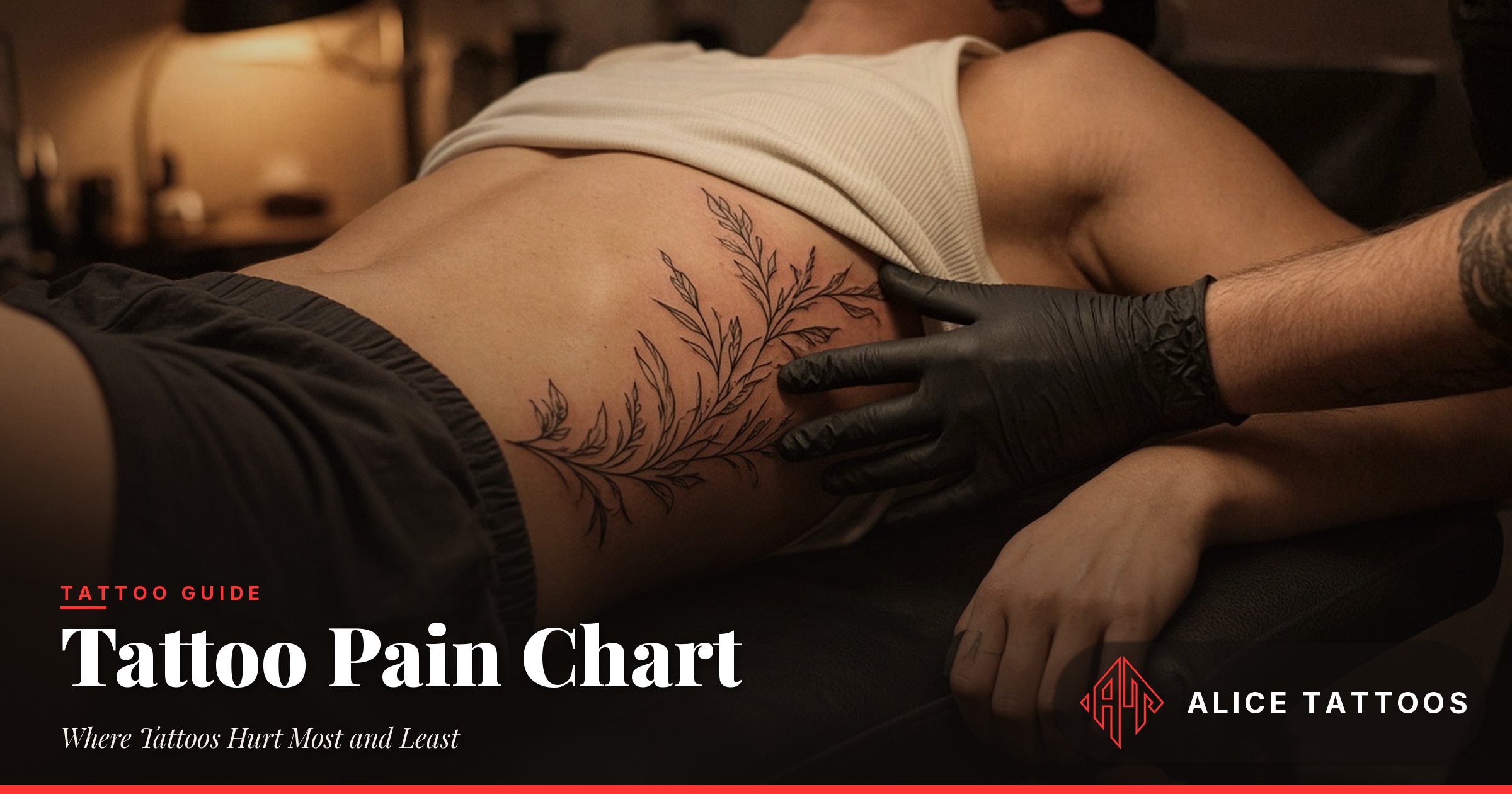
Short answer: tattoos hurt least on fleshy areas with few nerve endings, like the outer thigh, outer arm, forearm, and calf. They hurt most over bone and thin skin: ribs, sternum, spine, armpits, knees, elbows, feet, hands, and the head. Most people describe it as a hot scratch, between a cat scratch and a bad sunburn. It's rarely unbearable, and how you prepare makes a real difference.
Key takeaways
- Pain depends on three things: how much padding is under the skin, how close the bone is, and how many nerve endings the area has.
- Outlining feels sharp and scratchy. Shading and color packing feel more like a raw burn.
- Sleep, a full meal, water, and no alcohol beforehand noticeably change how much it hurts.
- Long sessions hurt more as they go on. Your adrenaline wears off after a couple of hours.
Tattoo pain chart by body part
Ratings are on a 1–10 scale and based on what clients and artists commonly report. Your own experience can vary by a couple of points either way.
| Placement | Pain | Why |
|---|---|---|
| Outer thigh | 2–4 | Thick muscle and fat, few nerve endings |
| Outer upper arm / shoulder | 3–4 | Padded, and the bone is deep |
| Outer forearm | 3–4 | Firm skin; more sensitive near the wrist |
| Calf | 3–5 | Muscular; the shin side is much worse |
| Upper back / shoulder blades | 3–5 | Thick skin; it hurts more over the shoulder blade and spine |
| Buttocks | 3–5 | Plenty of padding |
| Inner forearm | 4–6 | Thinner, softer skin |
| Inner bicep | 5–7 | Thin skin and many nerves |
| Chest | 5–7 | Gets sharper toward the sternum and collarbone |
| Lower back | 5–7 | Close to the spine and hip bones |
| Neck | 6–8 | Thin skin; the throat and sides are the worst |
| Hands and fingers | 6–8 | Thin skin over bone, lots of nerves |
| Hip bone | 7–8 | Bone directly under thin skin |
| Feet and ankles | 7–9 | Bone and nerves, almost no padding |
| Spine | 7–9 | Needle vibration on the vertebrae |
| Elbow / back of knee | 8–9 | Bony or nerve-dense, and thin skin |
| Ribs | 8–9 | Thin skin over bone, and breathing moves the skin |
| Sternum | 8–9 | Bone directly under the skin |
| Head and face | 7–9 | Thin skin over the skull, and vibration |
| Armpit | 9–10 | Extremely nerve-dense and soft |
For a visual version, the interactive pain guide in our studio maps pain levels across the body, with tips for each zone.
What does getting a tattoo feel like?
- Linework feels like a sharp, hot scratch along one line. This is where most people say "oh, that's it?" or "oh, that's sharp."
- Shading feels duller and broader, like a scrape over a sunburn.
- Color packing means the artist goes over the same area repeatedly to make the color solid. The skin gets tender, so it often feels the most raw by the end of a session.
- Bony areas add a buzzing vibration you can feel through the bone.
Fine-line tattoos often feel a little less intense per pass and finish faster. Large blackwork and color pieces involve more repeated passes over the same skin.
What makes a tattoo hurt more
- Session length. Your body's natural painkillers peak early. After 3–4 hours, skin that felt fine can feel raw. Splitting a big piece into sessions really helps.
- Poor sleep, an empty stomach, and dehydration all lower your pain tolerance.
- Alcohol makes you bleed more and makes the work harder, and reputable artists won't tattoo someone who's drunk. Skip it for 24 hours beforehand.
- Anxiety. Tension and anticipation amplify pain. Your first tattoo usually feels worse in your head than in your skin.
- Illness or sunburned skin. Reschedule rather than push through.
How to make your tattoo hurt less
- Pick your placement wisely for a first tattoo. The outer arm, forearm, thigh, and calf are good choices.
- Sleep well the night before, and eat a proper meal 1–2 hours before your appointment.
- Drink water and bring a sugary snack or drink for long sessions. Low blood sugar makes people faint.
- Breathe slowly and steadily. Holding your breath tenses everything. Breathe out as the needle moves.
- Bring a distraction: headphones, a podcast, a show, or a friend if the studio allows it.
- Ask for short breaks. Artists expect this. Just don't make them constant on a fine-line piece.
- Ask about numbing cream before you apply it. Some artists are happy to work with topical lidocaine products. Others won't, because some creams change how the skin takes ink. Always ask first. If you take medication or have a health condition, check with a doctor before using numbing products or painkillers.
How long does tattoo pain last afterward?
Expect sunburn-like soreness, warmth, and swelling for 2–3 days, then itchiness as it peels during week 1–2. Pain that gets worse after day 3 instead of better, along with spreading redness or pus, is not normal. Our day-by-day aftercare guide explains what's normal at each stage and when to see a doctor.
Choosing a placement you can sit through
Pain is temporary, but placement also affects visibility, cost, and how well the tattoo ages. Ribs and feet take longer to tattoo carefully, and hands and fingers fade faster. Before deciding:
- Preview your design on different spots with the try-on tool.
- Read how much a tattoo costs. Harder placements can take longer, and you pay for the time.
- Find an artist experienced with tough placements in the tattoo directory. A skilled artist works faster and more gently, which genuinely hurts less.
Frequently asked questions
Where is the least painful place to get a tattoo?
The outer thigh, outer upper arm, outer forearm, and calf are the least painful places for most people. They have thicker skin, more padding, and fewer nerve endings, and the bone sits deeper.
What is the most painful place to get a tattoo?
The armpit, ribs, sternum, spine, back of the knee, elbow, feet, and head are commonly rated the most painful. These areas have thin skin over bone or a high density of nerve endings.
What does a tattoo feel like?
Most people describe linework as a hot, sharp scratch and shading as a duller scraping burn, similar to rubbing a sunburn. Over bony areas you also feel vibration.
Does shading hurt more than outlining?
Outlining usually feels sharper, while shading and color packing feel duller but more raw. Shading involves repeated passes over skin that's already tender, so it often feels worse late in a session.
Can I use numbing cream for a tattoo?
Sometimes, but ask your artist first. Some artists accept topical numbing creams, while others refuse them because they can affect how the skin takes ink. If you have health conditions or take medication, check with a doctor too.
Do rib tattoos hurt a lot?
Yes. Ribs are usually rated 8–9 out of 10 because the skin is thin over bone and moves when you breathe. Shorter sessions, steady breathing, and an experienced artist make a big difference.
How long does a tattoo hurt after you get it?
Soreness, warmth, and swelling usually last 2–3 days, followed by itchiness during peeling. Pain that increases after day 3, especially with spreading redness or pus, should be checked by a doctor.