Tattoo Touch-Ups: When, Why & What They Cost
By Melanie Van Heerden · Tattoo Guide · Feb 17, 2026 · 5 min read
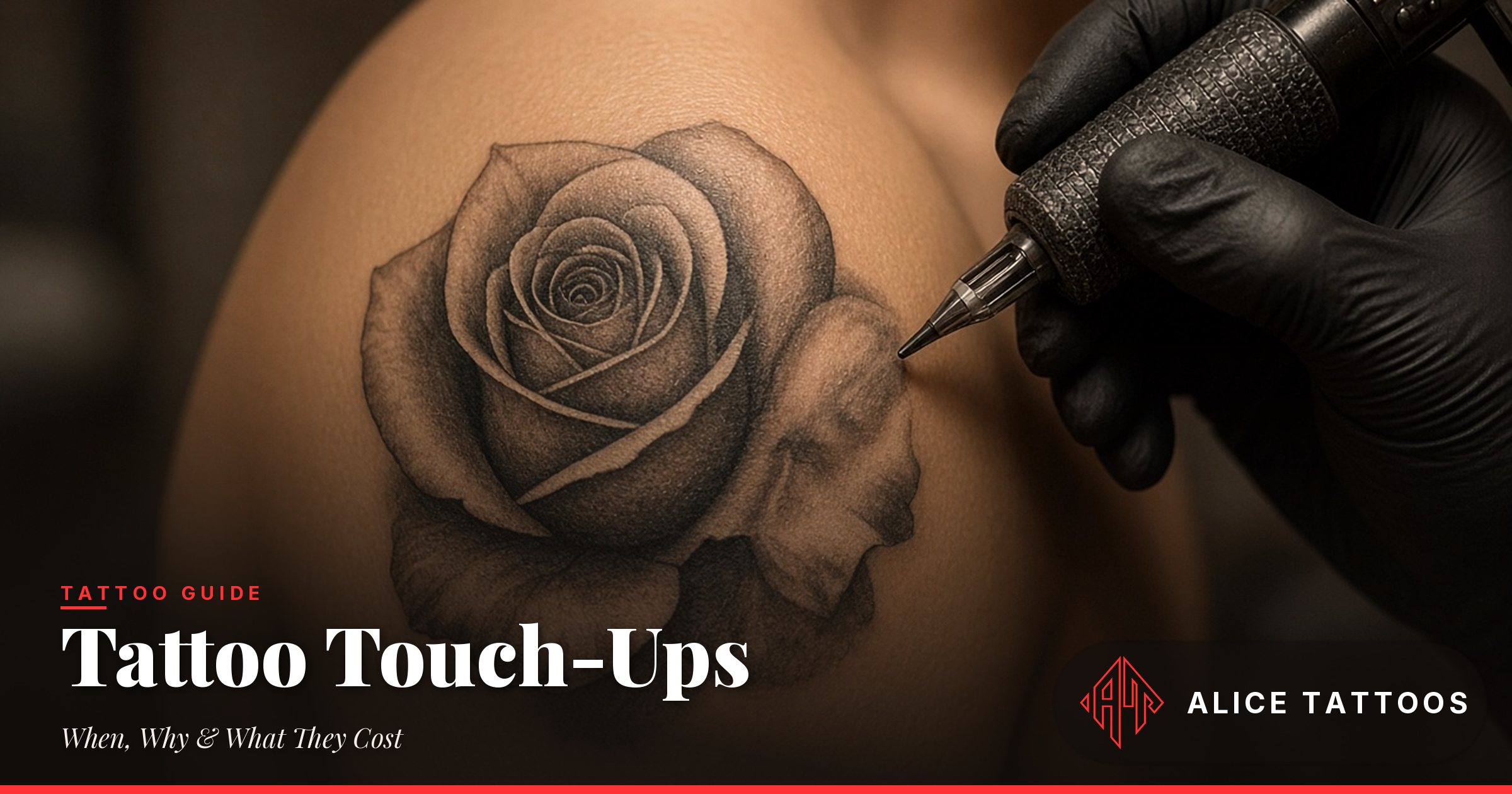
Short answer: most tattoos benefit from a touch-up after the first 4–8 weeks, once you can see how it truly healed — especially fine line work, hands, feet, and high-friction spots. Many artists include one free touch-up within a set window; otherwise expect the shop minimum to a few hundred dollars. A healing tattoo that looks patchy at week two is usually still settling — judge it at month two, not day ten.
Key takeaways
- Wait for a fully healed tattoo (4–8 weeks minimum) before deciding it needs work — week-two patchiness is often just unsettled skin.
- Fine lines, hands, fingers, feet, and joints need touch-ups most; bold traditional on stable skin often never does.
- Many artists offer a free first touch-up within 3–12 months — ask before you book, it's part of comparing artists.
- Prevention beats correction: sunscreen, moisturizer, and good aftercare are the real long-term fix.
Why tattoos fade or heal patchy
- Skin pushes back. Healing skin can push small amounts of ink out — normal, and worse if you picked at flakes or soaked it too soon.
- Friction and movement. Hands, fingers, feet, elbows, and anywhere clothing rubs constantly lose ink fastest. (Hand pieces have their own rules — the hand tattoos guide covers them.)
- Sun. UV is the number-one long-term fader. Unprotected sun on a healed tattoo steadily breaks pigment down.
- Technique. Ink set too shallow falls out; too deep and it spreads (a "blowout"). Consistent depth is what you're paying a skilled artist for.
- The design itself. Ultra-fine lines, tiny details, white ink, and soft pastel shading all fade faster by nature — the aging-well guide explains how to design around it.
Normal healing vs. time for a touch-up
| What you see | When | Verdict |
|---|---|---|
| Peeling, ink-colored flakes | Week 1–2 | Normal — don't touch, don't judge it yet |
| Cloudy, milky, dull look | Week 2–4 | Normal — new skin over the ink, clears as it matures |
| A few light or patchy spots | Week 6+ | Textbook touch-up territory |
| Lines look blurry or halos around them | Any time | Possible blowout — a touch-up can disguise it, ask your artist |
| Overall faded years later | Years | A refresh session restores it — very normal on older work |
If anything looks wrong during healing — spreading redness, pus, worsening pain — that's not a touch-up question, that's the aftercare guide's "see a doctor" column.
When to book it
The tattoo must be completely healed: no flaking, no shine, no tenderness — at minimum 4–8 weeks, and 2–3 months is better for larger pieces. Book with the original artist where possible; they know their own work and it's usually where any free policy applies. If the original artist isn't an option, choose someone whose style matches — the artist checklist applies here too.
What a touch-up costs
- Free: common within 3–12 months on their own work, excluding hands/fingers/feet at many shops — ask at booking, not after.
- Shop minimum to $150: typical paid price for small fixes — a few lines or a patch of fill.
- Hourly rate: larger refreshes or other artists' work price like any session — see what tattoos cost for current rates.
Keeping it from needing another one
A touch-up fixes the symptom; the cause is usually friction, sun, or skin that's hard on ink. Post-healing, the routine is simple and permanent: SPF 30+ whenever it's exposed, regular moisturizer, and the same aftercare discipline on the touch-up as the original. Log the heal in the Healing Hub — a photo a day makes it obvious whether week two was a problem or just a phase, and it feeds the Healed Journeys tab that helps the next person choosing an artist.
Frequently asked questions
When can I get a tattoo touched up?
Once it's fully healed — at least 4–8 weeks, longer for large or heavily worked pieces. The skin needs to be completely settled before it takes new ink well.
Are touch-ups free?
Often, within a window — many artists include one free touch-up within 3–12 months, but hands, fingers, and feet are commonly excluded. Ask about the policy when you book, not when you need it.
Why did my tattoo heal patchy?
Usually skin pushing ink out during healing — picking flakes, soaking, friction, or just how your skin took it. Thin-skinned and high-movement spots patch more. It's normal and fixable, not a sign something went medically wrong.
How many touch-ups does a tattoo need?
Bold work on stable skin often needs none. Fine line and high-friction placements may want one after the first heal and occasional refreshes over the years. If a tattoo needs constant rework, the placement or design is fighting your skin — sometimes the better answer is a bolder version.
Can a different artist touch up my tattoo?
Yes — match them to the style (a fine line piece wants a fine line artist), and expect to pay since their free policy covers their own work. Bring healed photos of the tattoo at its best if you have them.