Your First Tattoo: Everything to Know Before You Book
By Alice Tattoos · Tattoo Guide · Feb 14, 2026 · 5 min read
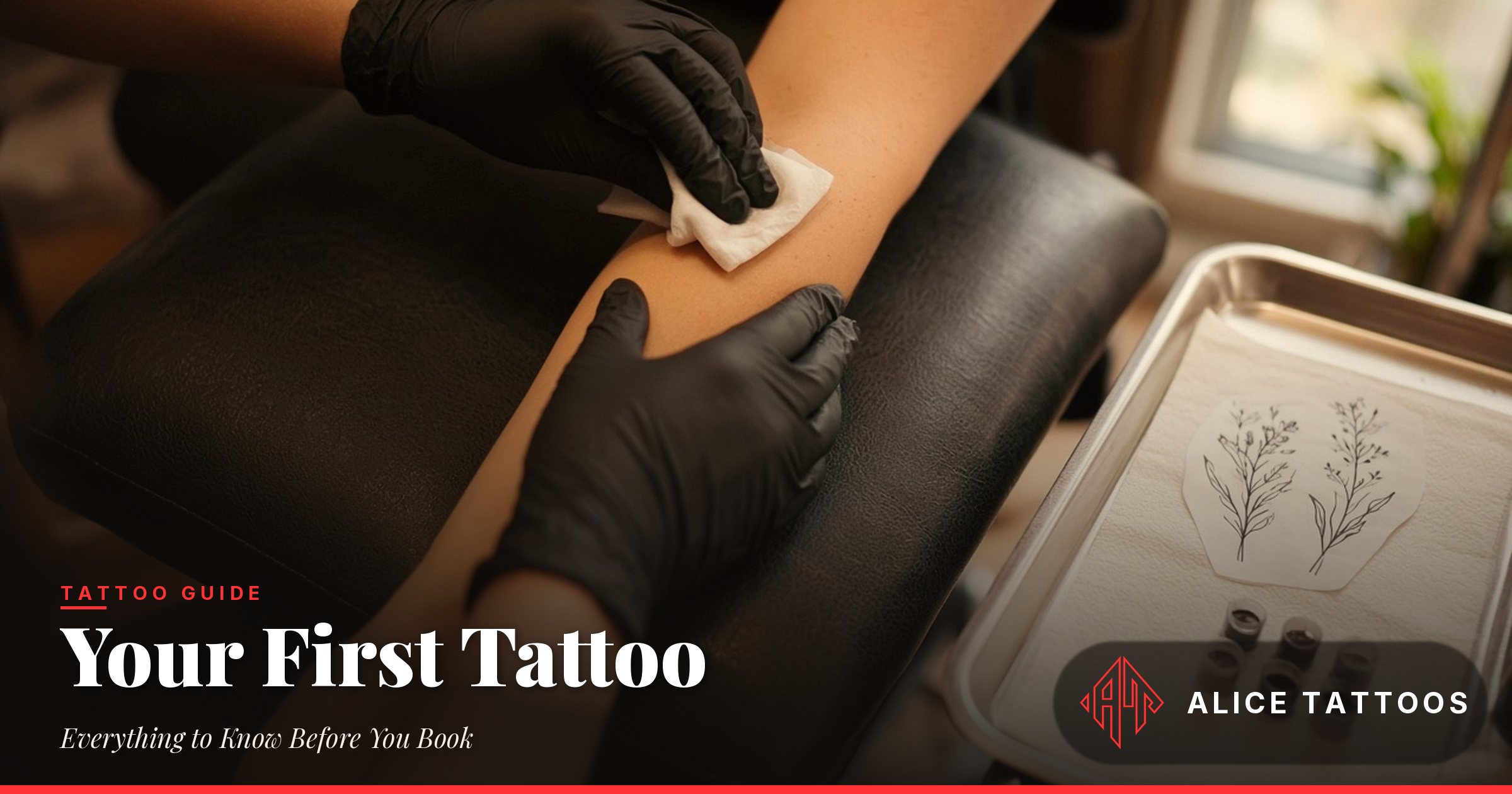
Short answer: a good first tattoo comes down to five decisions: a design you'll still want in ten years, a placement that fits your pain tolerance and your life, an artist who specializes in that style, a realistic budget, and proper aftercare afterward. Get those right and everything else — nerves, the appointment, healing — is manageable. This guide walks each decision in order.
Key takeaways
- Pick the design and let the design pick the artist — style specialization matters more than location or price.
- First-timer-friendly placements: outer forearm, upper arm, thigh, calf — lower pain, easy to cover, easy to heal.
- Budget the full number: tattoo + tip + aftercare. If it's tight, size down rather than artist down.
- The tattoo isn't done when you leave the chair — the first 2–4 weeks of aftercare decide how it looks forever.
1. Choose a design you won't outgrow
The designs people regret years later are usually the ones picked to satisfy someone else — a trend they didn't love, a partner's idea, a dare. A few honest filters:
- Would you want it in ten years? Not "is it cool now" — does it connect to something durable in you: a person, a place, a value, an image you keep returning to.
- Simplicity survives. Dense micro-detail blurs; clean, readable designs stay sharp for decades. The aging-well guide explains why.
- Sit with it. Keep the design somewhere you see daily for a few weeks. Still love it → book it. Indifferent → it wasn't the one.
- Need ideas? Generate directions in the AI design studio and preview them on your own skin with the try-on tool — seeing it on you is the closest test there is.
2. Pick the placement
Placement decides pain, visibility, cost, and how well it ages. For a first tattoo, easy spots buy you a calm first experience: outer forearm, outer upper arm, thigh, calf, shoulder blade — all low on the tattoo pain chart. If work or family is a consideration, covered placements cost you nothing later — the workplace guide maps which spots still matter professionally. Save the ribs, feet, hands, and sternum for tattoo two, when you know how you handle it.
3. Find the right artist
Match the artist to the style, not the other way around. A realism portrait artist isn't your fine-line floral person. The full vetting process lives in the 10-point artist checklist, but the short version: portfolio mostly in your style, healed photos that look clean (artist profiles here have a Healed Journeys tab), a licensed hygienic studio, and clear pricing. Browse by location and style in the tattoo directory.
4. Budget the real number
A small first tattoo runs roughly $80–$350 in the US (shop minimums start around $80–$100). Add the deposit (usually $50–$100, applied to the total), a 15–20% tip — the tipping guide has the etiquette — and aftercare supplies. Full pricing breakdown: how much a tattoo costs in 2026. If the budget is tight, a smaller piece from a great artist beats a bigger one from a cheap artist every time.
5. The appointment
- Before: sleep, eat a real meal 1–2 hours prior, hydrate, no alcohol for 24 hours. Wear something that exposes the spot comfortably.
- During: you'll approve a stencil on your skin first — check size and position in the mirror and say so if it's off; repositioning is normal. Then breathe steadily and let it happen. Most people say it was more manageable than they feared.
- After: the artist wraps it and gives you aftercare instructions. Follow their instructions — they know their work.
6. Heal it properly
Wash gently 2–3× daily, thin moisturizer, no picking, no soaking, no sun — the day-by-day aftercare guide walks the full month, and you can track healing with daily photos in the Healing Hub. First tattoos almost always look worse mid-heal than they end up — the cloudy phase is normal.
Common first-timer mistakes
- Choosing the cheapest artist — corrections cost more than quality does.
- Going too small and too detailed ("a whole landscape in two inches").
- Fingers, hands, or feet as a first placement — high pain and fast fading; see why hands are different.
- Bringing a committee. One trusted friend max — your tattoo is yours.
- Skipping sunscreen afterward — the first and worst slow-fader.
Frequently asked questions
How much does a first tattoo cost?
Most small first tattoos cost $80–$350 in the US — the shop minimum covers simple pieces under a couple of inches. Add a deposit (usually $50–$100, deducted from the total) and a 15–20% tip.
Where should I get my first tattoo?
The outer forearm, upper arm, thigh, or calf — low pain, stable skin that ages well, and easy to cover. Avoid ribs, feet, hands, and sternum until you know how you handle tattooing.
How painful is a first tattoo?
Less than most people fear — a hot, sharp scratching sensation, roughly 3–5 out of 10 on beginner-friendly placements. Anxiety amplifies it; sleep, food, and hydration beforehand genuinely help.
Should I get a small tattoo first?
Usually yes — a small, simple piece in an easy spot is a low-stakes way to learn how you sit, heal, and feel about it. Just not so small the detail has no room to age.
How do I pick a design I won't regret?
Choose something connected to you rather than the moment — and wait on it for a few weeks. If you still love it after seeing it daily, it's a good candidate. Trend-chasing and other people's ideas are the designs most often regretted later.