Sticker Sleeve Tattoos: The Collectible Ink Trend Explained
By Alice Tattoos · Style Guide · Feb 13, 2026 · 5 min read
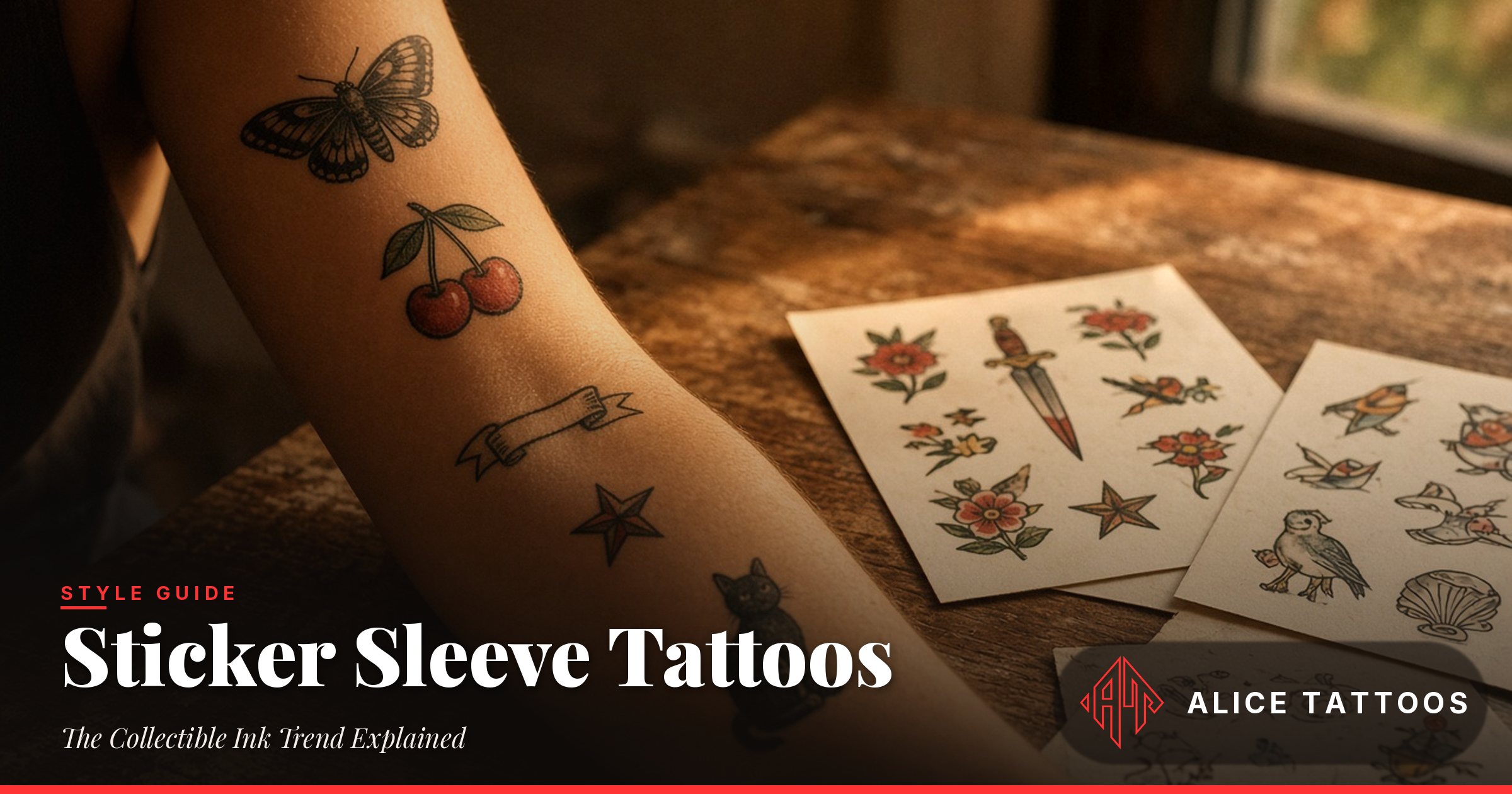
Short answer: a sticker sleeve is a sleeve built from many small, separate tattoos — like a sheet of collected stickers — added gradually over months or years. There's no single composition to commit to and no multi-thousand-dollar session. Each piece is small and affordable, and the gaps between them are part of the look. The only real discipline: leave space, and keep the individual designs readable.
Key takeaways
- Sticker sleeves are the budget path to a full sleeve — dozens of shop-minimum pieces instead of one $3,000+ composition.
- The style rewards mixed subjects and styles; what unifies it is spacing, not matching.
- Go bold and simple for each sticker — tiny details between other tattoos get visually lost.
- Plan the gaps: consistent negative space is what separates a sticker sleeve from a cluttered arm.
What makes it a "sticker" sleeve
A traditional sleeve is one continuous composition with background flow tying it together. A sticker sleeve deliberately isn't: each tattoo stands alone, surrounded by skin, like stickers on a laptop. Pieces are typically 1–4 inches, collected one at a time, often from different artists and even different cities.
That changes everything practical. No design commitment upfront, no pain marathon — each session is short — and the sleeve grows at whatever pace your budget allows.
Design principles that keep it looking intentional
- Spacing is the design. Aim for consistent gaps — roughly a finger's width or more — between pieces. Skin showing evenly reads as curated; pieces touching accidentally reads as a mistake.
- Simple reads better at distance. Bold traditional, clean line work, solid little symbols — each sticker needs to hold its own at arm's length.
- Mix subjects, loosely coordinate style. Total chaos works for some collectors, but a dominant style (say, mostly traditional or mostly black line) with a few outliers tends to look deliberate.
- Mind the joints. Elbow ditch, wrist, and inner-arm pieces sit differently — a good artist will orient stickers so they don't fold weirdly when you move.
- Keep a center of gravity. Slightly larger anchor pieces among the small ones stop the arm looking like pure scatter.
What it costs, realistically
Each sticker typically runs the shop minimum ($80–$200) to $300 depending on size and artist — twenty pieces over two years is a full sleeve for the price of a traditional one, spread out. The hidden cost of the trend is that small frequent tattoos are easy to impulse-buy; a folder of saved ideas beats a spur-of-the-moment design more often than not. Pricing detail lives in the tattoo cost guide.
How sticker sleeves age
Individually: like every tattoo — bold simple designs and stable placements hold best; micro-detail fades first. Collectively: aging is actually a strength. When a single piece softens, it's one sticker among many rather than a flaw in one big composition, and a tired sticker can be covered or reworked without disturbing the rest. Fading on individual pieces is covered in the touch-up guide.
Starting yours
- Decide a direction. All-traditional? Mixed? Mostly black? You can change course later, but a loose rule keeps it cohesive.
- Start on a flat, easy spot — outer forearm or upper arm — where both pain and healing are kindest (see the pain chart).
- Keep a running list of ideas. Generate and stash candidates in the AI design studio so you always know what the next sticker is.
- Use the same artist or deliberately don't. One artist gives consistency; collecting from many — including artists you meet traveling or at conventions — gives the sleeve a souvenir quality some collectors love.
Every new piece still needs real aftercare even when it's tiny — the day-by-day guide applies to a one-inch sticker exactly as much as a back piece.
Frequently asked questions
What is a sticker sleeve tattoo?
A sleeve made of many small, separate tattoos collected over time, each surrounded by skin like a sticker. Unlike a traditional sleeve, there's no continuous background composition — the gaps are part of the design.
How much does a sticker sleeve cost?
Each piece typically costs the shop minimum to about $300. A full sleeve of twenty-plus pieces can total what a traditional sleeve costs — $2,000 to $5,000+ — but spread across months or years instead of a few big sessions.
Can I mix different styles in a sticker sleeve?
Yes — that's the appeal. The sleeve coheres through consistent spacing more than matching styles. A dominant style with a few different pieces usually reads intentional; totally random sizes and crammed spacing reads cluttered.
What happens when I run out of space?
Pieces can be placed closer, layered into remaining gaps, or extended onto the other arm, chest, or legs. Some collectors eventually add background fill to unify the sleeve — turning it into a traditional one after the fact works surprisingly well.
Do small tattoos heal faster?
Surface healing follows the same 2–4 week timeline regardless of size, but small pieces are easier to protect from friction and sun, so they tend to heal cleaner. Each sticker still needs the same wash-and-moisturize routine.