How to Not Pass Out During a Tattoo: Why It Happens and What Actually Helps
By Alice Tattoos · Tattoo Guide · Nov 15, 2026 · 8 min read
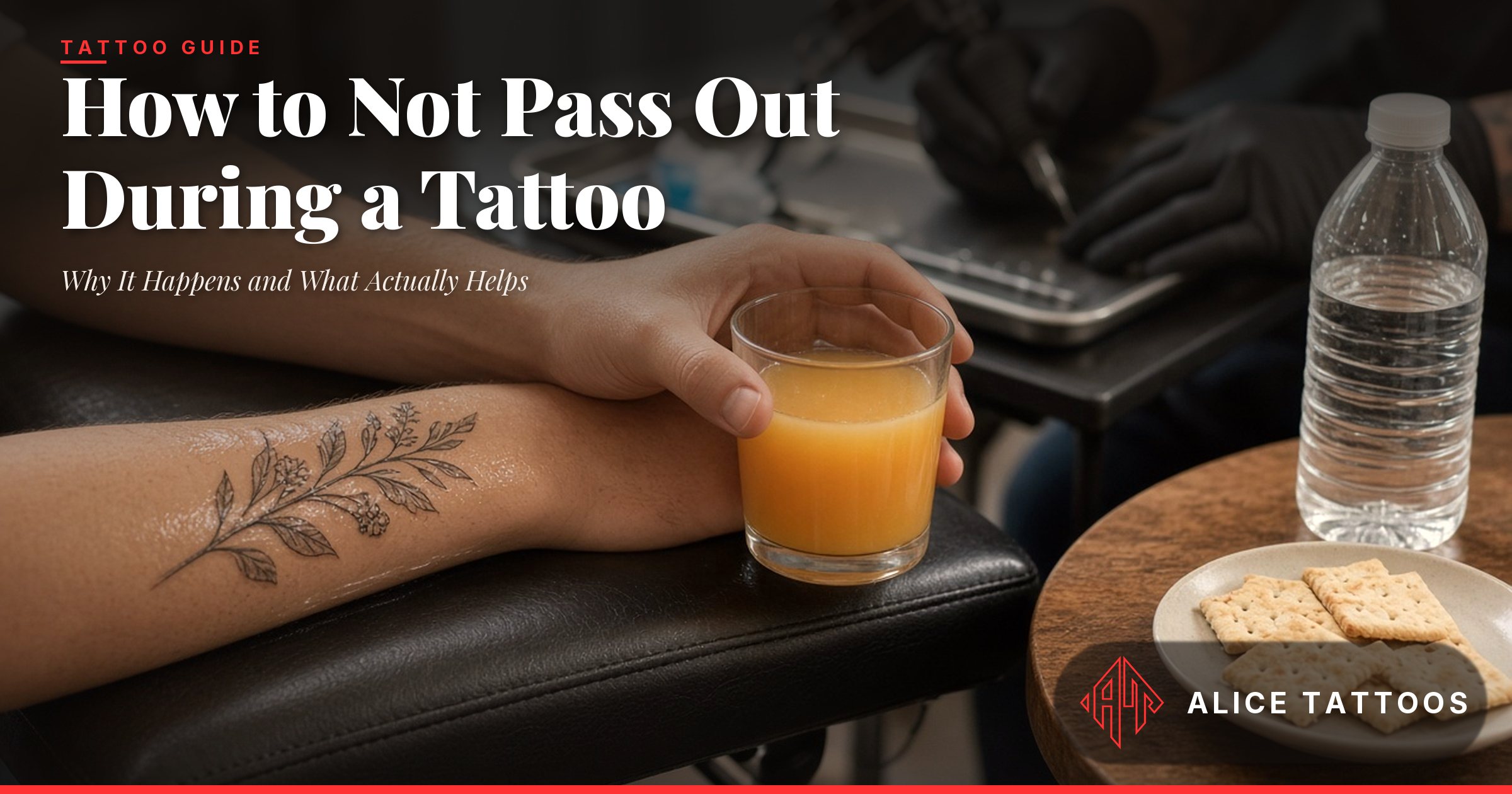
Short answer: most people who feel faint during a tattoo are having a vasovagal reaction, a common reflex where pain, nerves or heat make your heart rate and blood pressure dip for a moment. You can make it much less likely: eat a proper meal, drink plenty of water, skip alcohol, tell your artist if you've fainted before, and speak up the second you feel off. If it does start, lie back, get your legs up and squeeze your leg and stomach muscles until it passes.
Key takeaways
- Feeling faint in the chair is usually the vasovagal reflex. It's common and usually harmless, and it isn't a sign you're "weak".
- Most of the prevention happens before you arrive: a real meal, plenty of fluids, a full night's sleep and no alcohol.
- Tell your artist up front if needles, blood draws or piercings have made you faint before. They can start you lying down and plan breaks.
- Learn the warning signs (sweating, nausea, tunnel vision, ringing ears) and say something straight away. A two-minute pause is nothing. A faint means a much longer stop.
- Squeezing your leg, bum and stomach muscles (applied muscle tension) helps hold your blood pressure up. Blood services teach donors the same trick.
Why people pass out during tattoos
Passing out in the chair is rarely about how much the tattoo hurts. The usual cause is vasovagal syncope, the medical name for a common faint. A trigger sets off a reflex that briefly slows your heart and lowers your blood pressure. Less blood reaches your brain for a few seconds, and you get dizzy or black out. The Canadian Institutes of Health Research describes it as a sudden drop in blood pressure and heart rate in response to a stressful trigger, "like a needle".
The NHS lists the common triggers for fainting, and a tattoo appointment can stack up several of them at once:
- Not eating or drinking enough. Nervous first-timers often skip breakfast.
- Pain, or being very anxious, especially in the first few minutes before your body settles into the sensation.
- Being too hot. Think of a warm studio, a busy convention floor or a hoodie you didn't take off.
- Standing up too quickly after sitting or lying still for a long time.
- Alcohol or drugs, including a "calming" drink the night before.
Sitting still for a long time also lets blood pool in your legs, which NHS hospital leaflets on vasovagal syncope name as another contributor. That's why some people feel fine for an hour and then go woozy when they finally stand up for a break.
How common is passing out during a tattoo?
Nobody publishes a reliable count for tattoo studios, so be wary of any precise percentage you see online. Fainting in general is very common, though, and artists treat it as a normal part of the job. Ask in tattoo artist communities and you'll hear the same routine again and again: start fainters lying down, keep juice and sweets nearby, and cool the room down (one long thread among working artists reads like a checklist). Collectors often say it can catch out people who've been tattooed many times before. A different position, a hot day or an empty stomach can be enough.
How to not pass out during a tattoo: before your appointment
This is where you can make the biggest difference.
Eat a proper meal
Have a normal, filling meal a couple of hours before you go. Low blood sugar makes light-headedness much more likely, and running on coffee alone is the classic mistake. Include something slow-burning (eggs, oats, rice, a sandwich) rather than just a pastry. A huge, heavy meal right before isn't ideal either, so aim for "comfortably fed", not stuffed.
Hydrate the day before and the morning of
Drink water steadily in the 24 hours beforehand, not a litre in the car park. Blood services take this seriously. NHS Blood and Transplant's advice for donors who feel faint recommends plenty of fluids and salty or savoury snacks, and asks donors to drink 500ml of water just before donating, because having that fluid on board lowers the chance of fainting.
Sleep, and skip the alcohol
Get a full night's sleep, because tiredness lowers your pain tolerance and your ability to cope with stress. Don't drink alcohol the night before or the day of your appointment. It dehydrates you and makes fainting more likely, and most artists won't tattoo someone who's been drinking anyway.
Tell your artist your history
If you've ever fainted at a blood test, a vaccination or a piercing, mention it when you book or as soon as you arrive. It isn't embarrassing. It's useful information. Depending on the placement, your artist can start you lying down or reclined (which a lot of fainters say makes the biggest difference), plan more breaks and keep an eye on you in the first ten minutes, when nerves peak.
Dress cool and pack a small kit
- Light layers you can take off. Overheating is a common trigger.
- A bottle of water, plus a sugary drink or sweets for long sessions.
- Something salty to snack on during breaks.
- Headphones or a podcast, because distraction genuinely helps.
Our first tattoo guide covers the rest of what to sort out before the day.
During the tattoo: what helps in the chair
Breathe slowly and don't hold your breath
Many people hold their breath when the needle starts without noticing. Breathe slowly and steadily, with longer out-breaths than in-breaths, and keep breathing out as the needle moves. Our tattoo pain chart explains which placements tend to be most intense, so you can plan for them.
Use applied muscle tension
This is the most practical, evidence-backed trick, and it comes from blood donation. Applied muscle tension means tensing big muscles for a few seconds to push blood back up towards your heart and brain. The American Red Cross says it reduces the chance of fainting or pre-faint symptoms by up to 83% in donors. Scotland's blood service teaches it like this:
- Cross one calf over the other.
- Squeeze your thighs together, tense your stomach and point your toes back towards you.
- Hold for about five seconds, then relax for five seconds.
- Repeat five times, then switch legs.
The catch: don't tense the area being tattooed. Your artist needs that skin still and relaxed. If they're working on your leg, squeeze your fists, glutes or the other leg instead, and tell them what you're doing so a sudden twitch doesn't surprise them.
Stay cool and distracted
Music, a chat with your artist or a fixed point to look at all help. If watching the needle makes your stomach flip, don't watch it. Some collectors swear by a cold drink or a cool cloth on the back of the neck when they start to feel warm.
Take breaks, and stand up slowly
On long sessions, use breaks to eat and drink something. When you get up, sit on the edge of the bed or chair for a moment first, then stand. Blood pools when you've been still, and standing up fast is when many people go grey.
Warning signs and what to do if you feel faint
A faint rarely comes from nowhere. These are the warning signs listed by NHS hospital leaflets and the CIHR:
| What you might notice | What to do right away |
|---|---|
| Dizziness or light-headedness | Tell your artist: "I need to stop, I feel faint." |
| Sudden hot, cold or clammy sweat | Lie back flat and raise your legs if you can. |
| Nausea | If you can't lie down, sit and put your head between your knees. |
| Blurred or tunnel vision | Tense your leg, bum and stomach muscles, or clench your fists. |
| Sounds seeming distant, ringing ears | Sip water, then something sugary once you feel steady. |
The NHS recommends exactly this: lie down with your legs raised, or sit with your head lowered between your knees, drink some water, and clench your fists or cross your legs. Then take your time. Mayo Clinic notes that standing up too soon after a vasovagal faint, within about 15 to 30 minutes, puts you at risk of fainting again. Lie there a bit longer than feels necessary.
What happens if you do pass out?
Usually it's brief. The NHS says a person who has fainted will usually wake up within about 30 seconds. Your artist stops the moment they notice, keeps you safe, gets your legs up and waits for you to come round. Whether you carry on is up to you and your artist. Some people feel fine after a rest, a drink and some sugar. Others are wiped out, and finishing another day is the sensible call. Don't push through to "get it over with".
See a doctor if you've fainted and don't know why, or if it keeps happening. Call emergency services if someone doesn't come round within a minute, has chest pain or an irregular heartbeat, is shaking or jerking, or doesn't recover normally. Those are the NHS's red flags for fainting in general, not just in a studio.
After the session
Eat something, keep drinking water and give yourself a quiet evening, especially after a long sitting. Then switch your attention to healing. The aftercare guide covers the basics, our day-by-day healing guide explains what's normal each week, and the Healing Hub lets you log progress photos so you can see it improving.
If you're a known fainter and still choosing an artist, it's worth asking how they handle it during your consultation. You can browse artists and message them before you book through the tattoo directory.
Is it normal to pass out during a tattoo?
Yes, it happens and artists are used to it. It's usually a vasovagal reaction to pain, nerves, heat or low blood sugar rather than anything serious. Telling your artist in advance and preparing properly makes it much less likely.
What causes someone to pass out during a tattoo?
A reflex that briefly lowers heart rate and blood pressure, so less blood reaches the brain. Common triggers include an empty stomach, dehydration, anxiety, pain, a hot room, alcohol and standing up too quickly after sitting still.
How do you avoid passing out while getting a tattoo?
Eat a proper meal a couple of hours before, hydrate the day before, sleep well and skip alcohol. Tell your artist if you've fainted before, ask to start lying down, bring water and a sugary snack, breathe slowly and use applied muscle tension (tensing your leg, bum and stomach muscles) on areas that aren't being tattooed.
What happens if you pass out during a tattoo?
Your artist stops, keeps you safe and gets your legs raised. Most people come round within about 30 seconds. Rest, drink something and don't stand up too soon. Then decide with your artist whether to continue or finish another day.
Should I eat sugar before a tattoo?
Eat a proper meal first. A sugary snack on its own can leave you crashing later. Keep sweets or a sugary drink handy during the session, especially for long sittings, and have some if you start to feel shaky or light-headed.
Can you fall asleep during a tattoo?
Yes, and on long sessions some people do. That's different from fainting: drifting off while relaxed is generally fine. Just tell your artist if you feel drowsy, because a twitch as you wake can matter on detailed work.