Post-Tattoo Blues: Why Regretting Your New Ink Is Normal (and How to Ride It Out)
By Alice Tattoos · Tattoo Aftercare · Nov 9, 2026 · 7 min read
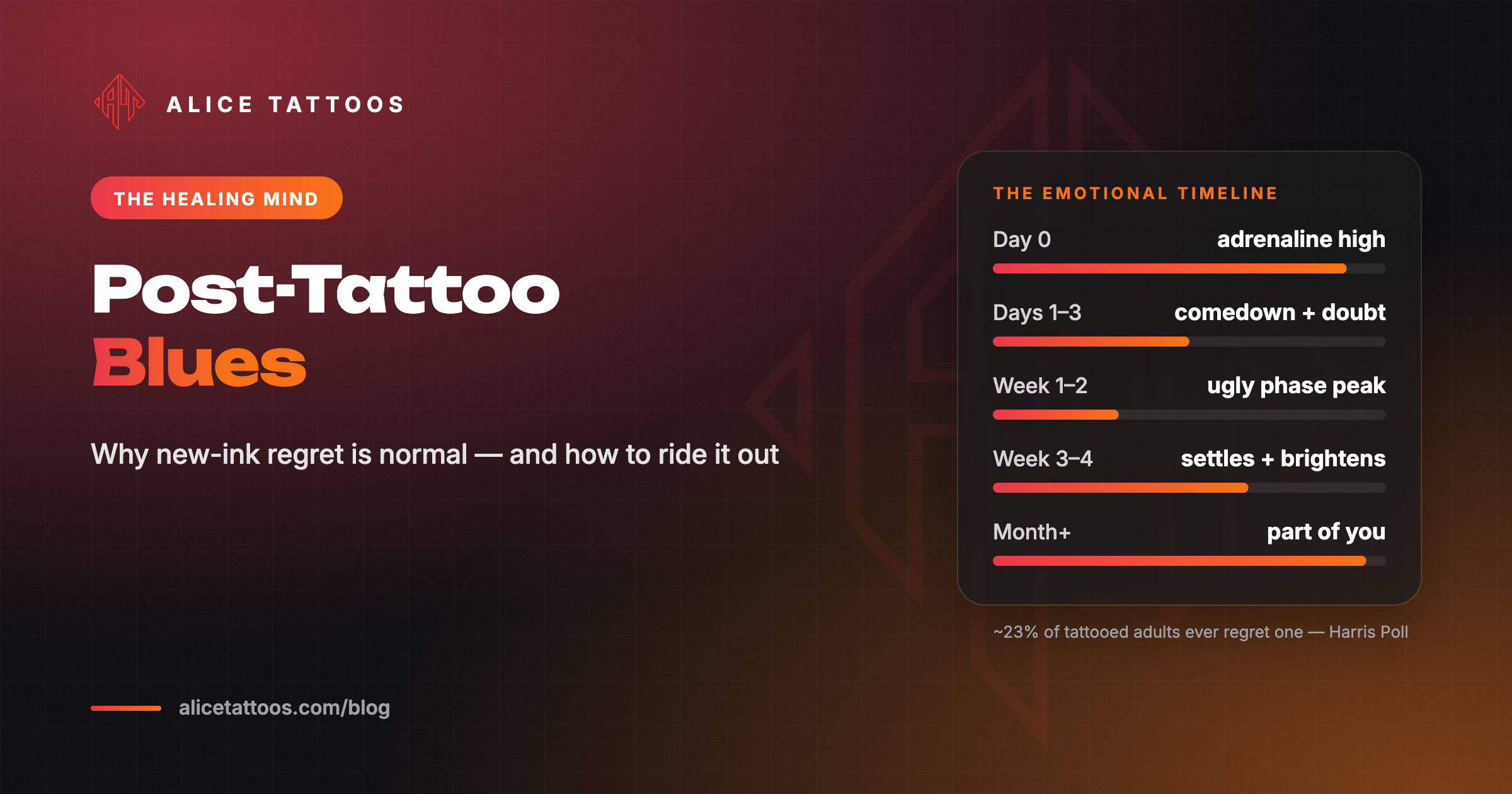
Short answer: yes, feeling a wave of doubt — even regret — after a new tattoo is completely normal, and it usually isn't about the tattoo at all. What most collectors call "post-tattoo blues" is a predictable emotional dip caused by an adrenaline comedown, the shock of permanence, and a healing process that makes fresh ink look genuinely rough for a week or two. For most people it fades as the tattoo settles; for the minority whose regret persists past full healing, there are real options.
Key takeaways
- A post-tattoo mood dip is normal and usually temporary — it peaks in the first two weeks, exactly when the tattoo also looks its worst.
- The "ugly phase" (days ~5–14: peeling, cloudy, dull ink) is a healing stage, not the result. Judging a tattoo mid-heal is like judging a cake at the batter stage.
- Normal adjustment vs. real regret: doubt that fades as the tattoo heals is adjustment. Dislike that survives a fully healed tattoo (8–12 weeks) is worth acting on.
- Documenting healing — photos every few days in the Healing Hub — is one of the most effective antidotes to the "it looks worse" illusion.
The emotional timeline of a new tattoo
Ask a room of heavily tattooed people about their first week with a piece and you'll hear the same story: euphoria in the chair, a strange flatness the next morning, a week of squinting at flaky skin wondering what they'd done, and then — somewhere around week three — a quiet moment of "oh, it's actually beautiful." The arc is predictable enough to map:
| Phase | What you feel | What's actually happening |
|---|---|---|
| Day 0 in the chair, walking out | Euphoria, pride, adrenaline | Endorphins and adrenaline running high; the tattoo looks its absolute best — saturated, glossy, fresh. |
| Days 1–3 | Flatness, "what did I do?" | The comedown. Swelling, weeping, tenderness; the permanence sinks in; the fresh shine is gone. |
| Days 5–14 the ugly phase | Peak doubt — "it looks worse" | Peeling, flaking, a cloudy film over the ink. Colors look muted, lines look grey. This is wound healing, not the tattoo failing. |
| Weeks 3–4 | Relief, growing attachment | Skin closes, the cloudiness clears, blacks and colors come back. Most doubt dissolves here. |
| Month 1+ | Ownership — it stops looking like a "tattoo" and starts looking like you | The piece integrates into how you see yourself. Most collectors stop noticing it as a separate thing at all. |
Why the crash happens
Nothing mystical about it — the post-tattoo dip is four ordinary things landing at once:
- The biochemical comedown. Hours of adrenaline and endorphins is a high; every high has a trough. That flat, slightly empty feeling on day two is chemistry, not intuition.
- Permanence shock. However much you planned, your brain registers the before/after. You lost the unmarked version of your skin — even people who love the result feel the substitution.
- Physical discomfort. A healing tattoo is a wound: sore, itchy, sleep-disrupting. Pain and poor sleep reliably distort mood and judgment.
- Outside voices. One raised eyebrow from a parent or coworker lands ten times harder in week one. You're still forming your own opinion, and other people's reactions rush into the gap.
None of these mean the tattoo was a mistake. They mean you got a wound, a dopamine cycle, and a permanent change in the same afternoon.
The ugly phase is not the tattoo
The cruelest timing in tattooing: your doubt peaks during the exact window when the ink looks its worst. Around days five to fourteen, the tattoo peels, flakes, and sits under a cloudy layer of healing skin. Blacks look grey. Colors look washed out. Fine lines look fuzzy. Every collector who's ever compared their week-two tattoo to the day-one photo has felt the same lurch.
It's an illusion with a boring explanation: you're looking at your ink through dead, healing skin. Once that layer sheds — following a proper aftercare routine, not picking — the tattoo underneath is the one you saw on day one, just settled into real skin instead of sitting shiny on top of it. Our day-by-day healing guide shows what each stage is supposed to look like, which is the fastest cure for "is this normal?" anxiety.
Normal adjustment vs. real regret
About 23% of tattooed adults say they've ever regretted a tattoo (Harris Poll, 2,225 US adults) — and the top reasons have a pattern: got it too young, it no longer fits their life, a name that outlived the relationship, poorly done work, or it was never meaningful to them. Notice what's missing: "the first two weeks looked bad." Fleeting doubt isn't on the list because it isn't regret — it's adjustment.
The useful distinction:
- Adjustment sounds like "this looks weird" while it heals, then fades as the ink settles. It's about appearance and novelty.
- Real regret survives a fully healed tattoo — you're still unhappy at eight to twelve weeks. It's usually about meaning, identity, or workmanship.
If you're in the second category, you're not stuck: a touch-up or rework fixes workmanship, and cover-ups and laser removal handle the deeper cases. But those are decisions for healed skin — no good choice gets made in week two.
What actually helps
- Document the healing. Photograph the tattoo every few days — the Healing Hub is built for exactly this. The progression photos prove the "it's getting worse" feeling wrong, and they give your artist something real to look at if you do have a concern.
- Hands off. Itching and flaking invite panic-picking, which is the one thing that can actually damage the ink. Clean, moisturized, untouched.
- Limit mirror autopsies. Checking it five times a day just re-triggers the doubt loop. Morning and evening is plenty.
- Give it thirty days. No verdicts before the skin has closed and the ink has settled. Whatever you think in week one, think it again in week four — most people don't recognize their own worry by then.
- Talk to your artist. They've watched hundreds of tattoos heal and hundreds of clients wobble. A two-line "is this normal?" message usually earns a genuinely reassuring answer.
The meaning layer
There's a reason post-tattoo emotions run deeper than "do I like how this looks." Tattoos are declarations — of memory, identity, belonging, a version of yourself you're choosing to keep. The psychology of why people get tattooed shows up again in healing: the pieces that wobble people most in week one are often the ones that matter most. An emotional tattoo carries emotional healing. That's not a flaw in the experience; it is the experience.
Minimizing regret before you ever book
The best time to handle tattoo regret is before the tattoo. Three habits prevent most of it:
- Live with the design first. Generate the concept in the AI studio, save it, look at it for a few weeks. Designs that still excite you on day twenty are keepers.
- Preview it on your body. Virtual try-on answers the question that causes the most week-one shock: "does this actually look right on me?"
- Choose the artist for the style. Most workmanship regret traces back to booking someone whose portfolio didn't already contain what you wanted. The artist directory exists so you can match the person to the piece before money changes hands.
Is it normal to regret a new tattoo?
Yes — temporary doubt after a new tattoo is one of the most common experiences in tattooing, even among people who end up loving the piece. It's typically an adrenaline comedown plus permanence shock plus an ugly healing phase, and it usually resolves within two to four weeks as the tattoo settles.
What is the ugly stage of tattoo healing?
Roughly days five to fourteen, when the tattoo peels and sits under a cloudy layer of healing skin. Colors look muted, blacks look grey, and fine lines look fuzzy — all temporary. Once the dead skin sheds, the ink underneath looks like it did on day one.
How long does post-tattoo regret usually last?
For most people, days to a couple of weeks — it tracks the healing timeline and fades as the tattoo brightens and becomes familiar. If you're still unhappy once the tattoo is fully healed at eight to twelve weeks, that's real regret worth addressing through a touch-up, rework, cover-up, or removal rather than waiting longer.
Can stress or anxiety make tattoo healing feel worse?
Yes. Pain, itching, and disrupted sleep all distort mood and judgment, and anxiety amplifies the "something's wrong" loop — which is why mid-heal panic-checking feels so convincing. Keeping a photo log of the healing progression is a reliable way to ground yourself in what's actually changing.
What should I do if I still hate my tattoo after it heals?
First, confirm it's fully healed — ink keeps settling for up to three months. Then talk to your artist: many issues are a touch-up away. Bigger mismatches have real options too — a rework, a cover-up, or laser removal — and our cover-up vs. removal guide compares them honestly.