Mentorship in Tattooing: Passing the Torch in a Changing Industry
By Alice Tattoos · Mar 16, 2026 · 5 min read
Introduction: More Than Just Ink
In an industry where every line is permanent, mentorship isn't optional—it's essential. Tattooing has always relied on an unspoken code of respect, precision, and tradition. At the heart of this code lies the relationship between mentor and apprentice—a dynamic that shapes not only technical skills but also professional ethics and artistic identity.
As tattooing embraces digital tools, AI design, and growing commercialization, the age-old practice of apprenticeship is being tested. Can mentorship survive in a tech-heavy, fast-paced tattoo economy? Or is it more crucial than ever?
The Legacy of Apprenticeship
Before online tutorials and TikTok hacks, the only way to become a tattoo artist was through a rigorous apprenticeship. This period—often unpaid—could last years and involved:
Learning hygiene and sterilization protocols
Observing the craft before touching a machine
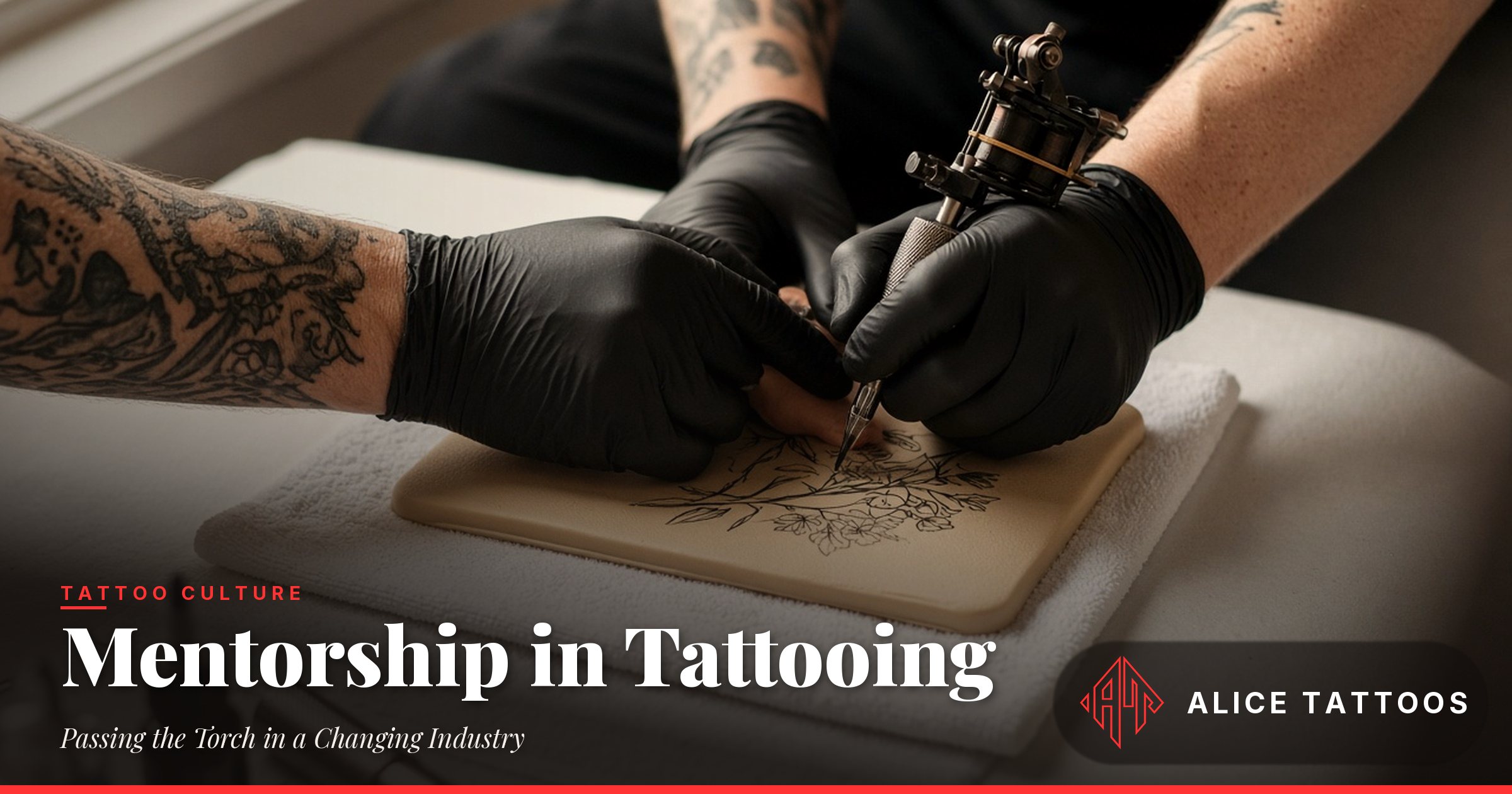
Practicing on fruit or synthetic skin
Cleaning studios and setting up stations
Developing a deep respect for the tools and traditions of the craft
The process was demanding by design. Tattooing, with its permanent consequences, required mastery—not shortcuts.
What Mentorship Teaches That Machines Can’t
No amount of digital design tools or tattoo apps can replicate the nuanced education a mentor provides. Key areas where human mentorship still shines include:
Tattoo placement and flow: Understanding how tattoos move with the body
Client interaction: Managing nerves, pain, and communication during sessions
Ethical boundaries: When to refuse a tattoo, how to deal with intoxicated clients, or protect minors
Cultural sensitivity: Avoiding appropriation and respecting sacred symbols
Mentorship instills judgment, accountability, and empathy—traits no machine can teach.
Challenges in a Changing Industry
Today’s tattoo industry is shifting:
Tech access has made design and equipment more attainable to newcomers
Social media fuels a DIY tattoo culture where some skip formal training
Commercialization has led to franchise studios prioritizing speed over skill
These trends put pressure on mentorship models, sometimes painting them as outdated or gatekeeping. But many seasoned artists argue that removing apprenticeships risks flooding the industry with underprepared artists—and damaging its reputation.
Adapting Mentorship for the Modern Era
To stay relevant, mentorship itself is evolving:
Online mentorship programs offer structured guidance for those without local access
Collaborative studios pair traditional training with digital design workflows
Hybrid apprenticeships mix hands-on training with courses on business, marketing, and tech tools
The goal isn’t to reject change, but to blend wisdom with innovation.
Voices from the Studio
Artists across the globe echo the value of mentorship:
"My mentor taught me to see skin like topography. You don’t get that from YouTube." — @ink.by.roman
"Even now, I run all my ideas past my old mentor. It’s about staying grounded." — Michelle Nakashima, Black Fern Studio
These testimonies highlight how mentorship doesn’t end—it evolves into a lifelong creative kinship.
Final Thoughts: The Torch Must Be Carried
Tattooing is more than ink—it’s a lineage. And like all lineages, it survives through teaching, guidance, and respect. While tools may change and trends may come and go, the need for thoughtful, rigorous mentorship remains a pillar of the industry.
At AliceTattoos.com, we celebrate the mentors and apprentices who keep this tradition alive—even as they adapt to the future. In honoring the past, we ensure the craft continues with integrity.
🕉 Learn more about tattoo culture and artist journeys at https://alicetattoos.com
Tags: #TattooMentorship #TattooApprenticeship #TattooTradition #TattooEthics #PassingTheTorch #TattooCulture #AliceTattoos