Virat Kohli's New Tattoo and Why Celebrity Ink Still Drives Global Trends
By Alice Tattoos · Industry News · Sep 6, 2026 · 9 min read
Virat Kohli's New Tattoo and Why Celebrity Ink Still Drives Global Trends
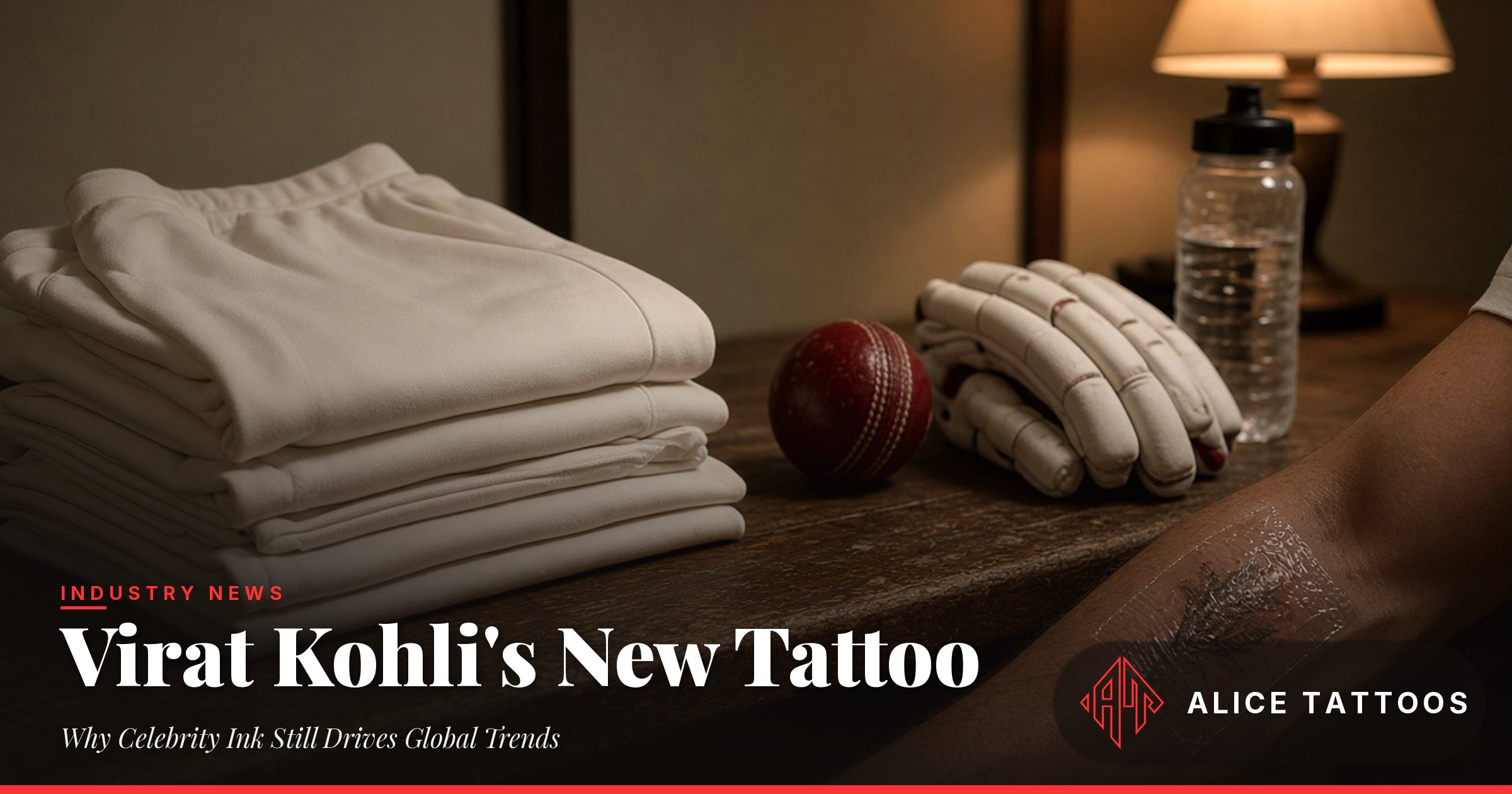
Last week, Virat Kohli walked into a Mumbai tattoo studio and walked out with fresh ink on his left arm. Within hours, the internet exploded. Cricket forums analyzed the placement. Tattoo artists dissected the style. Fans debated the meaning. And somewhere, a 19-year-old in Delhi made an appointment to get something similar.
This isn't new. Celebrity tattoos have shaped global trends since sailors brought them back from Polynesia. But in 2026, the mechanics have changed. Social media amplifies the message instantaneously. The London Tattoo Show just announced it will host 500 artists this month. The industry is projected to hit $2.4 billion worldwide. And the tension between individuality and virality has never been more complex.
Let's unpack what's actually happening when a famous person gets tattooed—and what it means for the rest of us.
The Virat Kohli Effect: Why One Tattoo Matters
Virat Kohli isn't just a cricketer. He's one of the most followed athletes on the planet, with hundreds of millions of fans across India, South Africa, Australia, and beyond. When he adds ink, he's not decorating his body—he's broadcasting a message about masculinity, creativity, and personal expression to a demographic that might never have considered tattoos otherwise.
Kohli's existing collection includes a Japanese samurai, his parents' names, and an Om symbol. Each piece has been photographed, analyzed, and copied thousands of times. His new left arm addition—reportedly after his fifth sitting for this particular piece—follows the same pattern: meaningful, visually striking, and executed by top-tier artists.
What makes this significant for tattoo culture: Cricket is religion in South Asia. When a player of Kohli's stature normalizes tattooing, he removes stigma for millions of young men who previously saw ink as unprofessional or rebellious. We've seen this at Alice Tattoos—South African clients of Indian descent frequently reference Kohli's pieces when explaining their vision during consultations.
But there's a downside. The "Kohli copycat" phenomenon means Mumbai studios will see an influx of clients wanting the exact same design. This creates tension between artists who want to create original work and clients who want to replicate celebrity ink. The smart artists will adapt—taking the inspiration and personalizing it.
The Numbers: Tattooing is Now a $2.4 Billion Industry
Here's a statistic that should get your attention: tattooing has become the fifth-largest growing retail sector globally. The London Tattoo Show returning for its fifth year with 500 artists isn't just a convention—it's proof that what was once counterculture is now mainstream commerce.
This growth isn't uniform. It's driven by several factors:
Demographic Shifts
Millennials and Gen Z view tattoos differently than previous generations. For them, ink isn't rebellion—it's decoration, identity expression, or personal narrative. Acceptance rates among professional workplaces have climbed dramatically. Banks, tech companies, and law firms that banned visible tattoos twenty years ago now employ heavily inked staff.
Social Media Amplification
Instagram and Pinterest have fundamentally changed how people discover, share, and copy tattoo designs. A beautiful piece posted on Monday can generate thousands of copy requests by Wednesday. This creates both opportunity and challenge for artists: more clients, but more pressure to replicate rather than create.
Technological Innovation
From AI design tools like our TattMonkey platform to advanced laser removal technology improving every year, the industry is embracing innovation. The result is lower barriers to entry for clients (easier to visualize) and higher standards for artists (competition forces excellence).
Cultural Normalization
When celebrities like Kohli, David Beckham, Rihanna, and Justin Bieber sport extensive ink without career consequences, the message is clear: tattoos are no longer limiting. This normalization expands the market beyond traditional demographics to include older first-timers and conservative professionals.
The Viral Tattoo Problem: When Individuality Becomes Mass Production
Here's the paradox of 2026 tattoo culture: we celebrate tattoos as ultimate personal expression, yet social media turns unique designs into viral templates replicated endlessly. That delicate fine-line floral you commissioned after months of Pinterest scrolling? It's now on ten thousand other bodies.
Instagram and Pinterest aren't evil—they're tools. But they create feedback loops where what's popular gets more popular, drowning out creative diversity. The London Tattoo Show's 500 artists represent an attempt to counter this: bringing together diverse styles, cultural traditions, and individual voices in one space.
From the artist's perspective, this presents real challenges:
- Clients arrive with screenshots demanding exact replicas
- The pressure to produce "Instagram-worthy" work can compromise artistic vision
- The algorithm rewards certain aesthetics (fine-line florals, micro-realism) over others
- Cultural designs get stripped of meaning to fit viral templates
But there are counter-trends emerging:
- "Anti-Instagram" tattoos deliberately embracing imperfection or outsider art aesthetics
- Clients commissioning completely custom, never-to-be-shared pieces
- Artists refusing to replicate copyrighted or viral designs
- A growing appreciation for traditional styles that resist digital reproduction
At Alice Tattoos, Washington navigates this by asking clients a simple question: "Do you want something that photographs well, or something that means something to you?" The two aren't mutually exclusive, but prioritizing meaning over virality usually produces better long-term satisfaction.
The South African Context: A Market Ripe for Growth
While global discussions focus on American and European markets, South Africa's tattoo scene is quietly exploding. The country's diversity—multiple cultures, languages, and artistic traditions—creates a unique environment where Western trends mix with African aesthetics.
We're seeing increased interest in:
- IsiXhosa and isiZulu pattern integration into contemporary tattoo designs
- Protea and indigenous floral motifs replacing imported European flowers
- Cape Malay geometric patterns reinterpreted through modern tattooing techniques
- Ndebele house painting aesthetics inspiring bold, graphic tattoo work
The London Tattoo Show's 500-artist lineup includes South African representation, but it's minimal. This is both a challenge and an opportunity: our market is underserved globally, which means local artists who develop distinctive styles have less competition and more potential for international recognition.
Kohli's influence is particularly relevant here. South African cricket fans—especially in the Indian community—follow his style closely. When he gets inked, we see ripple effects in Durban, Johannesburg, and yes, even in Alice. The cultural connection between South Asian and South African tattoo traditions is deeper than many realize.
Regulation and Responsibility: The El Paso Example
Not all tattoo news this week was celebratory. El Paso, Texas just proposed mandatory pre-inspections for tattoo shop license renewals—a significant regulatory step that signals growing government attention to the industry.
Proponents argue this protects consumers from unsafe practices: unsterilized equipment, untrained artists, dangerous inks. Critics worry about overreach and the burden on small studios already operating on thin margins.
The real issue: As tattooing becomes more mainstream, it attracts both legitimate professionals and opportunistic operators cutting corners. Regulation can help, but it needs to be smart—focusing on hygiene and safety standards rather than artistic restrictions.
South Africa currently has patchy tattoo regulation. Some provinces require health department certifications; others don't. This inconsistency creates risk for clients and challenges for reputable artists competing against unlicensed operators. Washington has long advocated for standardized nationwide requirements that don't stifle creativity but do ensure basic safety.
The Future: Where Celebrity, Technology, and Tradition Collide
So what does all this mean for the next year of tattooing? A few predictions:
1. AI-Assisted Design Goes Mainstream
Tools like our TattMonkey platform are just the beginning. Within two years, most studios will use some form of AI to help clients visualize designs before committing. This will reduce consultation time and increase client confidence—but it will also raise new questions about creativity and authorship.
2. Cultural Appropriation Gets Called Out More Loudly
As global connectivity increases, so does awareness of when cultural designs are used without understanding. The days of appropriating Polynesian, Indigenous, or African motifs without context are ending. Respectful collaboration—working with cultural practitioners, understanding meanings, compensating originators—will become standard.
3. Tattoo Removal Becomes as Common as Application
With the tattoo removal market growing rapidly and laser technology improving, "tattoo regret" is becoming less permanent. This is good for clients but creates a philosophical question for artists: if ink is no longer truly forever, does that change its meaning? At Alice Tattoos, we think permanence is still the goal—you should commit to the piece, not rely on the erase button.
4. Celebrity Influence Remains Powerful
As long as people follow celebrities on Instagram, famous ink will drive trends. The key is choosing which trends to follow. Kohli's decision to use top-tier artists for meaningful pieces—rather than flash-in-the-pan fashionable designs—is a model worth emulating.
What This Means for Your Next Tattoo
If you're inspired by Virat Kohli's latest ink—or any celebrity tattoo—here's how to act on that inspiration without becoming a copycat:
Identify what specifically appeals to you. Is it the style? The placement? The symbolism? The confidence it represents? Be specific. "I love the way it sits on the arm" gives your artist more to work with than "I want Kohli's tattoo."
Research artists who specialize in that style. Don't go to a realism specialist for traditional work, or vice versa. Washington's nine years of experience span multiple styles, but he's honest about when a client needs a different specialist.
Personalize the concept. Take the inspiration and make it yours. Different elements, different symbolism, different composition. The goal should be "inspired by" not "identical to."
Consider the long-term. Celebrity tattoos are designed for specific bodies and lifestyles. What works on a professional athlete might not work on your frame or your career path.
Trust the process. Good tattoos take time—Kohli's latest required five sittings. Don't rush. Don't bargain hunt. Your skin is permanent; treat it that way.
The Bottom Line
Virat Kohli's new tattoo matters because celebrity culture drives behavior. But the real story this week isn't one man's arm—it's an industry worth $2.4 billion that's navigating the tension between viral popularity and genuine artistry. The London Tattoo Show represents craft. Social media represents virality. And somewhere in between, individual clients and artists are figuring out what tattooing means in an age of infinite digital reproduction.
At Alice Tattoos, we don't chase trends. We create art that lasts longer than Instagram's algorithm. Whether you're inspired by Kohli, Rihanna, or your own imagination, the goal is the same: meaningful ink that you'll still love when the celebrities have moved on to their next obsession.