UV Blacklight Tattoos: The Invisible Ink Revolution
By Alice Tattoos · Industry News · Jul 18, 2026 · 4 min read
UV Blacklight Tattoos: The Invisible Ink Revolution
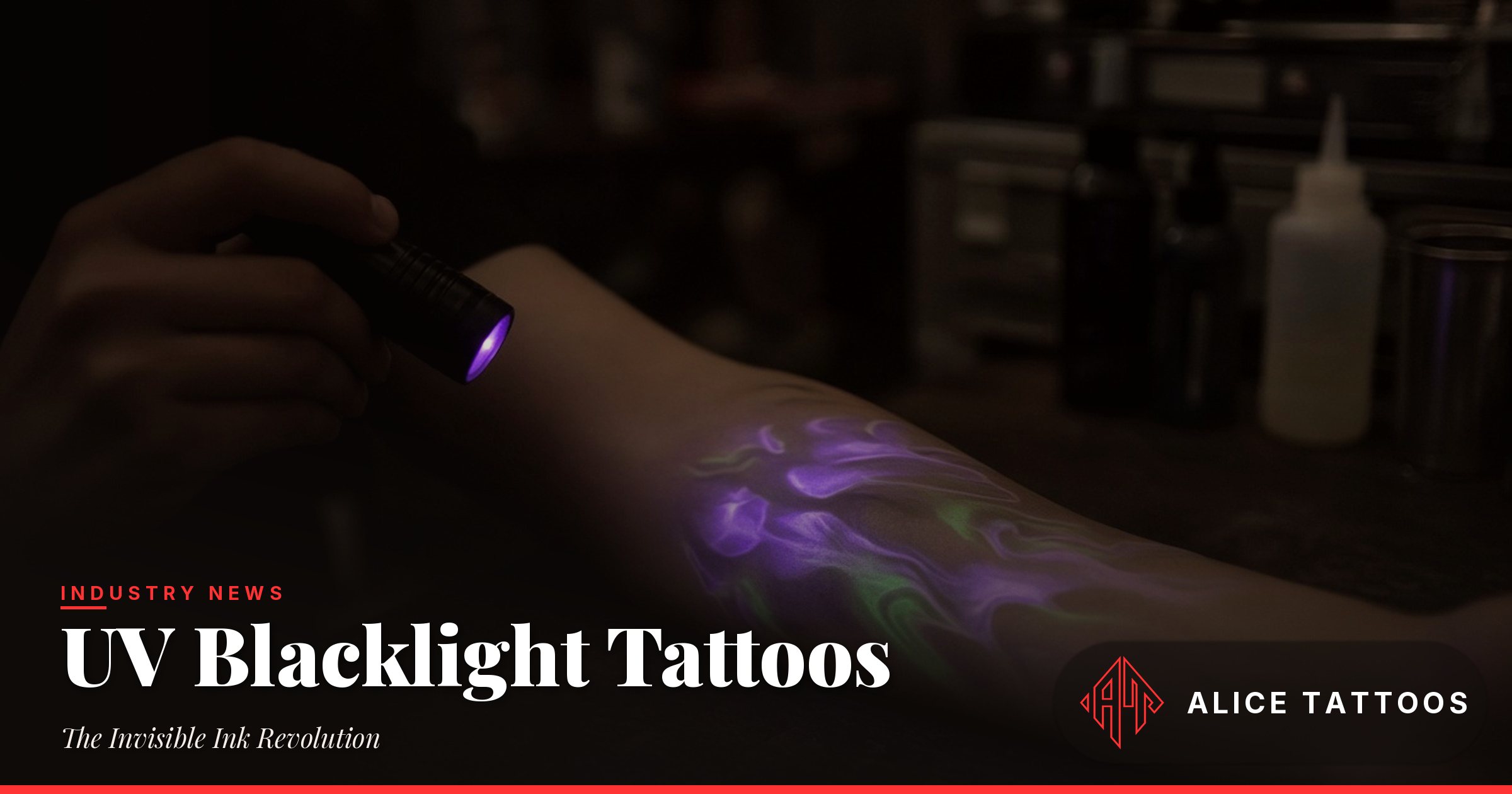
Imagine walking into a nightclub and watching your tattoo transform from invisible to glowing electric blue. Or catching a glimpse of hidden art on your wrist that only appears under the blacklights at a concert. This isn't science fiction—it's UV tattooing, one of the most technically challenging and visually striking niches in contemporary body art.
At Alice Tattoos, we've been watching the UV tattoo scene evolve from experimental curiosity to sophisticated art form. Here's everything you need to know about invisible ink before taking the leap into this luminescent world.
How UV Tattoos Work
UV tattoos use phosphorescent pigments that remain invisible (or nearly invisible) under normal lighting but glow vividly under ultraviolet blacklight. These specialized inks contain compounds that absorb UV radiation and re-emit it as visible light, creating that characteristic neon effect.
The technology has evolved significantly. Early UV inks were notoriously unreliable—thick, difficult to work with, and prone to fading or causing reactions. Modern formulations are safer, more stable, and produce more consistent results, though they still require specialized knowledge to apply correctly.
Visible vs. Invisible: Two Approaches
There are two primary approaches to UV tattooing:
Completely Invisible
Pure UV ink without any visible pigment creates tattoos that are completely undetectable under normal conditions. These are popular for professional settings where visible tattoos might cause issues, or for clients wanting secret personal art.
UV-Enhanced Visible Tattoos
More common is combining UV ink with traditional pigments—creating tattoos that look normal in daylight but gain additional glowing elements under blacklight. Think of stars that glow in a night sky tattoo, or hidden details in a larger piece that only emerge at the club.
The Safety Conversation
UV inks have a controversial history. Early formulations contained phosphorus and other compounds that caused skin reactions in some clients. While modern inks are significantly safer, the FDA still hasn't approved any tattoo pigments specifically for UV reactivity in the US.
This regulatory gray area means researching your artist is crucial. Reputable UV specialists use inks from established manufacturers with safety data sheets and track records. At Alice Tattoos, we only work with UV pigments we've thoroughly vetted—your safety matters more than the novelty effect.
Artist Selection: Not Everyone Can Do This
UV tattooing requires specialized skills that many artists don't possess. The ink behaves differently—it's often thinner or more viscous than traditional pigments, requiring adjusted machine settings and needle configurations. Visibility is limited during application, making placement precision challenging.
Look for artists with extensive UV portfolios, not just one or two experimental pieces. Ask about their ink sources, their aftercare protocols for UV work, and their policy on touch-ups (UV tattoos often need refreshing more frequently than traditional work).
Healing and Longevity
UV tattoos heal similarly to traditional tattoos but with some important differences. The initial healing might appear minimal since the tattoo is invisible—this can lead clients to neglect aftercare. Don't make this mistake. The tattoo is still an open wound even if you can't see it clearly.
UV ink tends to fade faster than traditional pigments. While a black tattoo might last decades, UV elements often need refreshing every few years to maintain their glow. Factor this maintenance into your decision.
Best Practices for UV Tattoos
If you're considering UV work:
- Get a small test piece first to check for reactions
- Avoid UV-only tattoos for your first piece—combine with visible ink
- Choose placement carefully—UV tattoos look odd under partial blacklight exposure
- Budget for more frequent touch-ups
- Inform future artists about existing UV ink—it affects cover-up options
The Verdict
UV tattoos offer something unique in the body art world—the ability to carry hidden art that reveals itself in specific contexts. They're not for everyone, and they require more maintenance than traditional tattoos, but for the right client with the right expectations, they create genuinely magical effects.
At Alice Tattoos, we approach UV work with careful consultation and honest discussion about limitations. The glow is real, but so are the considerations. Let's talk about whether invisible ink belongs in your skin.