Biomechanical Tattoos: Where Flesh Meets Machine
By Alice Tattoos · Industry News · May 10, 2026 · 6 min read
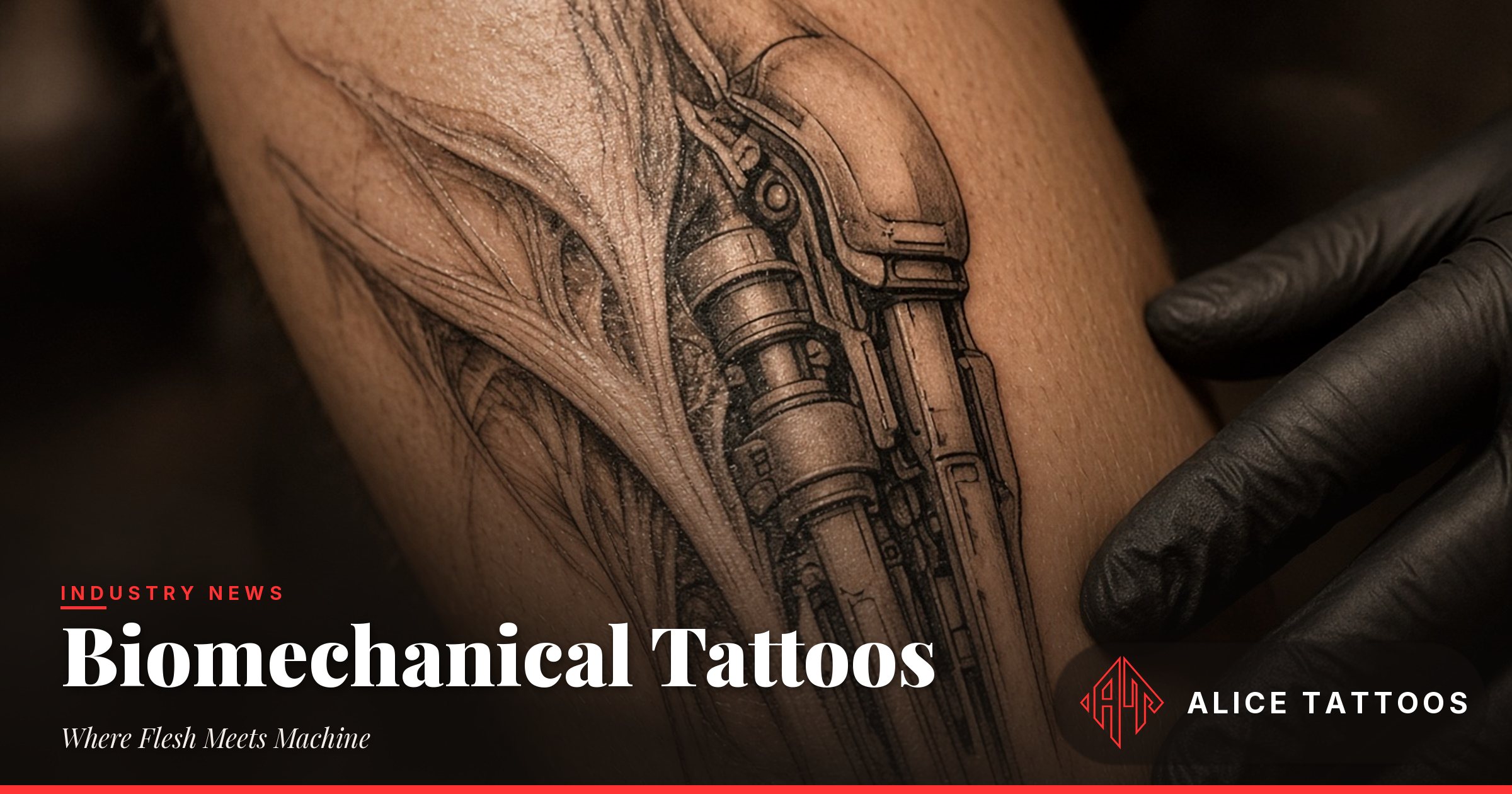
Biomechanical Tattoos: Where Flesh Meets Machine
Imagine looking down at your arm and seeing gears turning beneath synthetic skin, pistons pumping where muscle should be, circuits pulsing with electric life. This isn't science fiction—it's biomechanical tattooing, one of the most technically demanding and visually stunning styles in contemporary body art.
At Alice Tattoos, we've watched biomechanical work evolve from niche curiosity to mainstream fascination. What started as H.R. Giger-inspired horror imagery has expanded into a sophisticated genre encompassing cyberpunk aesthetics, steampunk machinery, and organic-mechanical fusion. This guide explores the world of biomechanical tattoos—from their artistic origins to what you need to know before committing to mechanical ink.
The Origins of Biomechanical Art
The biomechanical aesthetic emerged from the dark imagination of Swiss artist H.R. Giger, whose work on the Alien franchise fused organic and mechanical elements into haunting, sensual nightmares. Giger's biomechanoids—creatures that blurred the line between living tissue and industrial machinery—created a visual language that tattoo artists would spend decades exploring.
Early biomechanical tattoos in the 1980s and 90s were primarily black and grey horror pieces, heavy on shading and dark atmosphere. Artists like Paul Booth brought the style to prominence, creating sleeves and back pieces that made skin appear ripped open to reveal mechanical horror beneath.
Today's biomechanical tattooing has diversified dramatically. While dark, Giger-esque work remains popular, artists now explore:
- Cyberpunk aesthetics—neon circuitry, chrome plating, holographic elements
- Steampunk machinery—brass gears, steam vents, Victorian industrialism
- Medical/mechanical fusion—exposed bones replaced with titanium, organic hearts pumping beside mechanical ones
- 3D illusion work—hyper-realistic tears in skin revealing gears and wires
What Makes a Great Biomechanical Tattoo
Biomechanical work demands exceptional technical skill. Unlike traditional tattoos that sit on the skin, great biomechanical pieces appear to transform it. Achieving this illusion requires:
Anatomical Knowledge
The best biomechanical tattoos work with body anatomy rather than fighting it. Gears replace joints. Pistons align with muscle groups. Circuitry follows nerve pathways. Understanding how the body moves and flexes allows artists to create mechanical elements that feel integrated rather than applied.
Perspective and Depth
Biomechanical tattoos must convince the eye that there's dimension beneath the surface. This requires mastery of shadow, highlight, and perspective. Gears must appear to recede into the body. Chrome surfaces need to reflect imaginary light sources. The mechanical elements must occupy believable three-dimensional space.
Texture Variation
Skin, metal, rubber, oil, blood—biomechanical tattoos juggle multiple textures that must each read clearly. Smooth chrome contrasts with rusted steel. Organic tissue meets machined precision. The interplay of textures creates visual interest and reinforces the flesh/machine dichotomy.
Popular Biomechanical Substyles
Organic Biomech
This style maintains the horror origins of biomechanical tattooing. Ripped skin reveals not organs but alien machinery. Tendons become cables. Veins transform into pneumatic tubes. The effect is both disgusting and fascinating—body horror as art.
Clean Cyberpunk
Think Neon Genesis Evangelion or Ghost in the Shell. Sleek chrome plating, glowing circuitry, and futuristic interfaces. This style emphasizes the integration of technology with body rather than the violation of it. The result feels more utopian than dystopian.
Steampunk Mechanics
Brass and copper replace chrome and steel. Visible gears, steam vents, and clockwork mechanisms create a retro-futuristic aesthetic. This style appeals to those who prefer warm tones and Victorian industrial vibes over cold cyberpunk minimalism.
3D Realism
Hyper-realistic tears in skin revealing mechanical interiors. These pieces often use the body's natural contours to enhance the illusion—elbows become gaskets, knuckles transform into mechanical joints. The effect can be startlingly convincing.
Planning Your Biomechanical Piece
Body Placement Strategy
Biomechanical tattoos work best where they can interact with body movement. Joints—elbows, knees, shoulders—provide natural mechanical analogs. Muscular areas offer opportunities for piston-like elements. The spine becomes a chassis. Think about how your body moves and where mechanical elements would logically integrate.
Size Considerations
Biomechanical tattoos rarely work small. The detail required for convincing machinery demands space. Sleeves, back pieces, and chest panels offer the canvas necessary for immersive biomechanical work. Small biomechanical pieces often look like stickers rather than integrated transformations.
Color vs. Black and Grey
Traditional biomechanical work relied entirely on black and grey, creating that Giger-esque horror atmosphere. Modern biomechanical tattoos increasingly incorporate color—glowing blue circuitry, rusted orange-brown oxidation, chrome silver highlights.
Black and grey offers timeless appeal and ages well. Color adds visual pop and expands the stylistic vocabulary. The choice depends on your personal aesthetic and long-term maintenance considerations.
Finding the Right Biomechanical Artist
Not every tattoo artist can execute biomechanical work convincingly. This style requires specific skills that many traditional tattooists never develop. When researching artists:
- Look for extensive biomechanical portfolios—not just one or two pieces
- Examine their perspective work. Do mechanical elements look three-dimensional?
- Check texture rendering. Can they distinguish between metal, rubber, and organic tissue?
- Ask about their design process. Biomechanical tattoos require extensive planning
- Discuss how they adapt designs to body movement. Static designs look odd on dynamic anatomy
Biomechanical specialists often command higher rates than general tattooists. This reflects the additional design time and technical skill required. Budget accordingly—cutting corners on biomechanical work yields disappointing results.
The Biomechanical Experience
Getting a large biomechanical tattoo is a commitment. These pieces often require multiple lengthy sessions. The detail work means longer appointment times. The coverage means more healing area to manage.
But for those drawn to the aesthetic, the result is unmatched. A well-executed biomechanical tattoo transforms how you see your own body. You become art that moves, a living sculpture that blurs the boundary between organism and machine.
Biomechanical in 2026
As we move through 2026, biomechanical tattoos continue evolving. Advances in tattooing equipment allow for finer detail and smoother gradients. Artists incorporate influences from video games, anime, and concept art. The style has expanded far beyond its horror origins into something more diverse and sophisticated.
Whether you're drawn to cyberpunk chrome, steampunk brass, or organic horror, biomechanical tattooing offers a way to literally embody your fascination with the intersection of technology and biology. At Alice Tattoos, we're ready to help you become the machine-human hybrid you've always imagined.