The Botanical Tattoo Renaissance: Why Floral Ink Is Dominating 2026
By Alice Tattoos · Industry News · Apr 21, 2026 · 8 min read
The Botanical Tattoo Renaissance: Why Floral Ink Is Dominating 2026
Spring has arrived, and with it comes a powerful resurgence in botanical tattooing. Floral designs have always held a place in tattoo culture, but 2026 has elevated plant-based ink from traditional roses and lotuses to an entirely new level of artistic sophistication. At Alice Tattoos, we've watched this botanical renaissance unfold—and it's reshaping how collectors think about nature-inspired body art.
Today's botanical tattoos combine hyper-realistic detail with dynamic composition, creating pieces that don't just depict flowers but capture their essence, movement, and symbolic weight. From botanical realism to stylized interpretations, floral ink has become the defining aesthetic of the year. Here's why botanical tattoos are dominating 2026 and what you need to know before committing to plant-based ink.
The Evolution of Botanical Ink
Traditional floral tattoos often followed predictable patterns: single roses on shoulders, lotus flowers on lower backs, simple daisies on ankles. These classics remain timeless, but 2026 has pushed botanical tattooing into uncharted artistic territory. Today's botanical pieces treat plants as complex subjects worthy of detailed study and interpretation.
Botanical Realism: Nature Under a Microscope
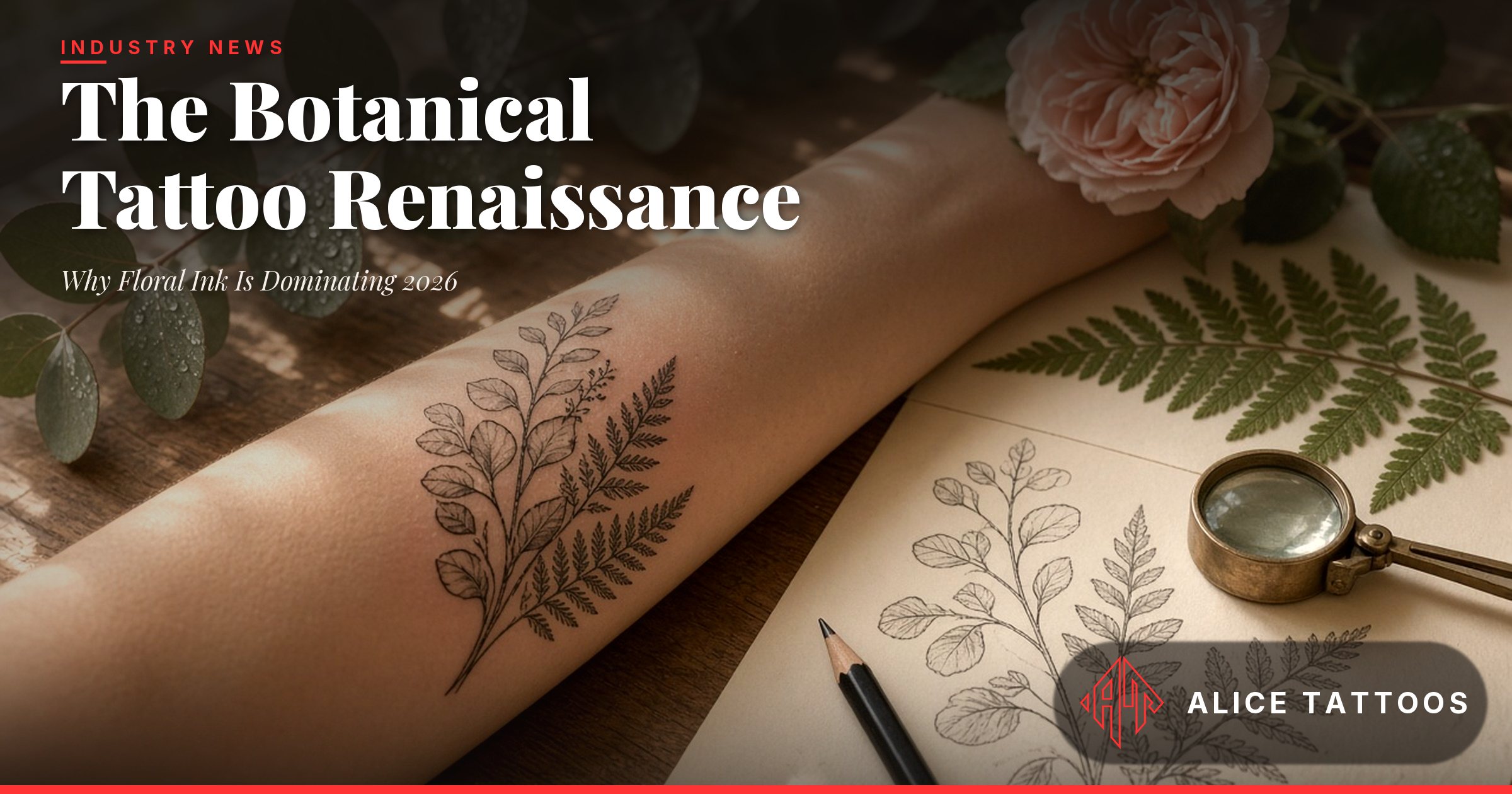
The most dramatic shift in floral tattooing is the move toward botanical realism—hyper-detailed plant renderings that resemble scientific illustrations or fine art botanical drawings. These tattoos capture not just the visual appearance of plants but their structural complexity: the veining in leaves, the gradations in petal color, the way light filters through translucent flower tissue.
Creating botanical realism requires specialized knowledge. Artists study plant anatomy, understanding how leaves attach to stems, how flowers emerge from buds, how root systems function. This scientific attention to detail separates amateur floral work from professional botanical art.
"Botanical realism is basically portraiture for plants," Washington Mpandawana explains. "You're capturing a living subject with all its nuances. The same skills that make a good portrait artist—attention to detail, understanding of light and shadow, patience—make a good botanical artist."
Dynamic Floral Designs: Movement and Flow
Static, flat floral arrangements are giving way to dynamic designs that suggest movement and growth. Flowers twist on stems, leaves reach toward imagined sunlight, vines curve around anatomical contours. These compositions make botanical tattoos feel alive rather than merely decorative.
This movement toward dynamic floral art reflects a broader cultural shift. As people spend more time indoors in digital spaces, tattoos that carry natural vitality feel increasingly meaningful. A botanical sleeve or back piece becomes a way of carrying wilderness and growth energy literally on your skin.
Popular Botanical Motifs in 2026
While roses and lotuses remain perennial favorites, 2026 has seen explosive interest in less common botanical subjects. These emerging motifs carry distinct symbolic weight and aesthetic appeal.
Wildflowers and Meadow Plants
Instead of cultivated garden flowers, many collectors now choose wildflowers—the resilient plants that grow without human intervention. Queen Anne's lace, black-eyed Susans, wild violets, and native grasses create compositions that feel organic rather than manicured.
Wildflower tattoos often carry meanings related to natural beauty, resilience, and authenticity. Unlike roses, which carry centuries of cultural baggage, wildflowers feel personal and unscripted.
Tropical and Exotic Flora
As travel has become more accessible, collectors increasingly choose plants from places they've visited or dream of visiting. Bird of paradise flowers, monstera leaves, orchid varieties, and tropical ferns create vacation energy that lasts year-round.
These exotic botanicals offer visual complexity—unusual shapes, bold colors, dramatic silhouettes—that stand out from more common floral choices. A back piece featuring jungle foliage makes an entirely different statement than a shoulder rose.
Botanical Illustration Style
Some collectors opt for tattoos that mimic vintage botanical illustrations—the style found in old field guides and herbarium collections. These pieces often feature multiple views of the same plant (flower, leaf, seed) arranged in scientific composition.
The illustration style appeals to collectors who value intellectual engagement with their ink. These tattoos announce that you're thoughtful about the natural world rather than simply decorative.
Birth Flowers: Personal Botanical Symbolism
One of 2026's hottest botanical trends involves birth flowers—the specific plants associated with each month. Unlike birthstones, which everyone knows, birth flowers offer more subtle personal symbolism. January carnations, February violets, March daffodils, April sweet peas, May lily of the valley, June roses, July larkspurs, August gladiolus, September asters, October marigolds, November chrysanthemums, and December narcissus each carry distinct meanings.
Birth flower tattoos work beautifully as solo pieces or combined into family arrangements. A mother might get her own birth flower alongside her children's, creating a botanical family portrait. Partners might exchange birth flower designs as commitment symbols less expected than names or dates.
The birth flower trend reflects larger cultural movements: personalization, meaning-seeking, and resistance to generic flash art. These tattoos announce that your ink was chosen specifically for you, not pulled randomly from a shop wall.
Technical Considerations for Botanical Tattoos
Botanical tattoos present unique technical challenges. The fine details, subtle color gradations, and delicate linework require careful planning to ensure long-term success.
Placement Strategy
Botanical designs with fine details age best on areas with stable skin—upper arms, thighs, calves, shoulders. Highly mobile areas like fingers, feet, or ribs may blur delicate botanical work over time. Consider how much detail you're including and whether your chosen placement can sustain it.
Flowing botanical designs work beautifully as wraps—around arms, legs, or torsos—because vines and stems naturally follow body contours. A botanical piece that curves with your anatomy feels integrated rather than applied.
Color Considerations
Botanical tattoos offer rich color opportunities, but color choices affect longevity. Reds and oranges tend to fade faster than blues and greens. White highlights—popular for creating petal depth—may yellow over time.
Strategic color placement can maximize impact while managing fade. Putting your boldest colors in central focal points, with more muted tones in peripheral areas, ensures the most important visual information remains clear even as the tattoo ages.
Artist Selection
Botanical realism requires specific artistic skills. Look for artists with:
- Portfolio evidence of detailed plant work
- Understanding of botanical structure
- Ability to render subtle color transitions
- Experience with composition and flow
A general tattooist can execute a basic rose. A botanical specialist can capture the specific character of a peony versus a ranunculus versus a garden rose. The difference is substantial.
The Sustainability Connection
Botanical tattooing's rise coincides with broader cultural movements toward environmental consciousness and sustainable living. Many collectors choosing plant-based designs also prioritize eco-conscious tattoo practices—vegan inks, biodegradable materials, studios with environmental commitments.
At Alice Tattoos, we've expanded our eco-friendly options in response to this demand. Botanical collectors often ask about our sustainability practices before booking, treating their tattoo choice as part of larger lifestyle alignment with natural values.
This consciousness extends to design choices as well. Native plant tattoos that celebrate local ecosystems. Invasive species acknowledged as cautionary symbols. Endangered flowers memorialized as conservation reminders. Botanical tattoos have become vehicles for environmental expression.
Combining Botanical with Other Styles
Perhaps the most exciting botanical developments involve hybrid styles—botanical elements integrated with other tattoo traditions to create something entirely new.
Botanical Neo-Traditional
Combining classic Neo-Traditional technique with botanical subjects produces bold, graphic floral work. Thick outlines, saturated colors, and stylized interpretations make botanical subjects pop with graphic intensity.
Fine-Line Botanicals
Delicate single-needle work creates ethereal botanical pieces that feel more like drawings than traditional tattoos. These subtle designs appeal to collectors wanting botanical art without bold visual dominance.
Botanical Blackwork
Solid black botanical designs—often featuring negative space flowers emerging from black backgrounds—create dramatic contrast and visual impact. These high-contrast pieces feel contemporary and bold.
Planning Your Botanical Piece
If you're considering botanical ink, several planning considerations will ensure satisfaction:
Species Selection: Research the specific plant you want. Understand its growth habit, blooming patterns, cultural associations. The more you know about your chosen botanical, the more meaningful and accurate the finished tattoo.
Seasonal Timing: Consider whether your chosen plant has seasonal significance. Spring flowers, fall foliage, evergreen branches each carry temporal associations that might enhance or complicate your tattoo's meaning.
Color vs. Black: Decide whether you want full color realism or stylized black and grey. Both approaches work beautifully with botanical subjects but produce entirely different visual effects.
Scale Considerations: Botanical detail requires adequate space. Very small botanical tattoos often lose their precision. Ensure your artist has enough canvas to execute the detail level you're envisioning.
The Bottom Line
Botanical tattoos in 2026 represent more than a trend—they signal a maturing relationship between humans and nature expressed through permanent art. Whether you choose a single wildflower or an elaborate botanical sleeve, plant-based ink connects you to larger cycles of growth, resilience, and natural beauty.
At Alice Tattoos, we're committed to botanical excellence. From detailed realism to stylized interpretations, we bring botanical subjects to skin with the respect and artistry they deserve. Your body is a garden—choose the flowers that tell your story.