Neo-Traditional Tattoos: The Perfect Balance of Old School Durability and New School Artistry
By Alice Tattoos · Industry News · Apr 11, 2026 · 6 min read
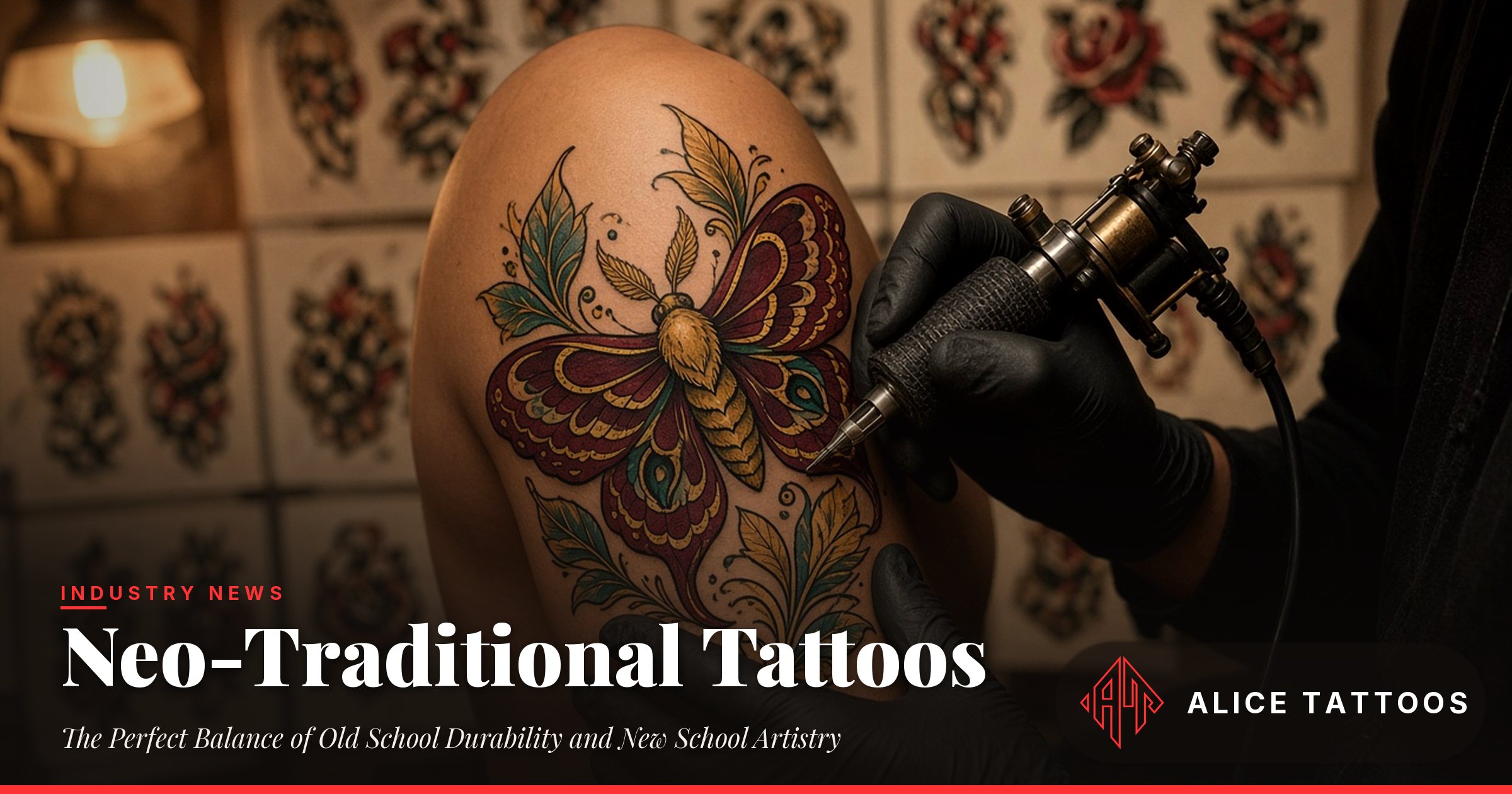
Neo-Traditional Tattoos: The Perfect Balance of Old School Durability and New School Artistry
In the ever-evolving world of tattoo art, few styles have achieved the staying power and universal appeal of Neo-Traditional. As we move through 2026, this hybrid approach has emerged as the definitive style for collectors seeking the perfect balance: the bold durability of American Traditional roots combined with the artistic sophistication of contemporary techniques.
At Alice Tattoos, we've watched Neo-Traditional evolve from an underground favorite to a mainstream powerhouse. This isn't just another trend—it's a mature art form that honors tattoo history while embracing innovation. Here's why Neo-Traditional has become the voice of modern tattooing.
What Makes Neo-Traditional Distinctive
Neo-Traditional sits at the intersection of past and present, borrowing the best elements from multiple tattoo traditions while creating something entirely new. The style maintains American Traditional's commitment to bold lines and solid saturation—characteristics that ensure tattoos age beautifully over decades. But where Traditional work can feel constrained by its limited palette and subject matter, Neo-Traditional explodes into a full spectrum of colors, compositions, and artistic influences.
The hallmarks of Neo-Traditional include:
- Bold outlines: Thick, confident lines that remain crisp as the tattoo ages
- Saturated color: Rich, vibrant pigments that pop against the skin
- Dimensional shading: Smooth gradients that give flat designs depth and volume
- Varied subject matter: Animals, portraits, botanicals, and cultural imagery executed with technical precision
- Classical composition: Balanced designs that feel timeless rather than trendy
"Neo-Traditional gives you the best of both worlds," explains Washington Mpandawana, founder of Alice Tattoos. "You get the longevity that made American Traditional famous, but with the artistic freedom that modern collectors expect. It's durable art that doesn't look dated."
The Evolution from Traditional Roots
American Traditional tattooing emerged from the early 20th century, codified by artists like Norman Collins (Sailor Jerry) who created a visual language designed to travel well and age gracefully. Limited by the technology of the time—fewer needle configurations, restricted color palettes—Traditional work developed constraints that became its signature: simple shapes, bold outlines, and primary colors.
These constraints produced incredibly durable tattoos. A well-executed Traditional piece from fifty years ago often looks remarkably preserved today, while more delicate styles may have blurred or faded significantly. This longevity made Traditional the gold standard for serious collectors.
Neo-Traditional emerged in the late 1990s and early 2000s when artists began asking a revolutionary question: What if we kept Traditional's technical foundations but expanded the artistic possibilities? Advances in needle technology allowed for finer detail. Improved pigments offered broader color ranges. And cross-pollination with fine art training brought composition theory, color theory, and anatomical knowledge to tattoo studios.
The result was a style that respected its roots while growing beyond them. Neo-Traditional artists could create work that had the staying power of Traditional pieces but with the visual complexity and artistic nuance of contemporary illustration.
Why Neo-Traditional Dominates 2026
Several factors have propelled Neo-Traditional to the forefront of 2026's tattoo landscape:
Aging Gracefully
In an era of Instagram-worthy tattoos that may not survive a decade, Neo-Traditional offers something increasingly rare: permanence. Collectors who watched fine-line tattoos blur and watercolor pieces fade are returning to styles with proven longevity. Neo-Traditional's bold foundations ensure that today's investment remains tomorrow's artwork.
Versatile Subject Matter
Where Traditional iconography—anchors, roses, swallows—can feel limited, Neo-Traditional welcomes virtually any subject. Animals rendered with botanical accuracy, portraits with emotional depth, cultural symbols with respectful complexity—all find expression within Neo-Traditional's technical framework.
Artist-Driven Innovation
The style attracts technically skilled artists who want to push boundaries without sacrificing durability. This creates a virtuous cycle: talented artists choose Neo-Traditional, producing exceptional work that attracts more collectors, who then commission more ambitious pieces that drive further innovation.
Cultural Resonance
In a moment when authenticity and craftsmanship feel increasingly valued, Neo-Traditional's handmade quality resonates. These tattoos announce that their wearers prioritize substance over trendiness, art over decoration, permanence over novelty.
The Technical Mastery Required
Creating exceptional Neo-Traditional work demands mastery across multiple disciplines. Artists must understand color theory to create harmonious palettes, anatomical structure to place designs that flow with the body, and composition principles to balance complex elements within cohesive wholes.
The style's reliance on smooth gradients and dimensional shading requires needle control that takes years to develop. Unlike styles where mistakes can be hidden behind busy textures, Neo-Traditional's clarity exposes every imperfection. Only confident, experienced artists produce genuinely exceptional Neo-Traditional tattoos.
This technical barrier creates natural quality filtering. While any artist can attempt Neo-Traditional, only those with genuine skill produce work that earns recognition. This scarcity adds to the style's prestige and collector appeal.
Neo-Traditional at Alice Tattoos
At our Eastern Cape studio, Neo-Traditional has become a signature approach. Washington's background—combining formal art education with nearly a decade of tattoo practice—positions him perfectly for this technically demanding style. His work regularly incorporates influences from African visual traditions, creating Neo-Traditional pieces that carry cultural resonance while respecting the style's technical requirements.
"Neo-Traditional feels like the future built on solid foundations," Washington notes. "Every piece I create in this style, I'm thinking about how it'll look in twenty, thirty, fifty years. That's a different mindset than styles optimized for Instagram today."
The studio's Neo-Traditional portfolio spans subjects from wildlife—rendered with biological accuracy within bold graphic frameworks—to portraits, botanicals, and abstract compositions. Each piece balances artistic ambition with longevity considerations, creating tattoos designed to remain vibrant across lifetimes.
Choosing Neo-Traditional: Questions to Consider
If you're considering Neo-Traditional work, several factors deserve consideration:
Artist Selection: This style requires proven expertise. Review portfolios for smooth gradients, consistent line weight, and evidence of aging work. Ask how long they've been creating Neo-Traditional specifically—not just Traditional, which requires different skills.
Subject Matter: Neo-Traditional excels with subjects that benefit from both bold graphic treatment and fine detail. Animals, portraits, flowers, and symbolic imagery all translate beautifully. Extremely minimalist concepts may be better suited to other styles.
Placement Strategy: The style's bold nature works well on most body areas, though highly visible locations allow these statement pieces maximum impact. Consider how the design flows with your body's natural contours.
Color Commitment: While Neo-Traditional can incorporate black and grey, the style truly sings with full color. Be prepared for vibrant, saturated work that commands attention.
The Future of the Style
As tattoo technology continues advancing, Neo-Traditional will likely absorb new capabilities while maintaining its core principles. Improved pigments may expand color possibilities. Refined needles may enable even finer detail. But the style's essential value proposition—durability meeting artistry—will remain constant.
In a tattoo culture increasingly dominated by fleeting trends, Neo-Traditional offers something timeless. It's the style that looks as appropriate on a 60-year-old executive as on a 25-year-old creative professional. It travels across decades without becoming dated, across cultures without losing meaning, across fashion cycles without becoming irrelevant.
For collectors seeking tattoos that will remain sources of pride throughout their lives, Neo-Traditional has become the default choice—not because it's trendy, but because it's enduring.